Specifying Discount Circle Beaded Gold Mirror Supplier for Wholesale and OEM Orders
When a brand extends an existing range, a circular beaded gold mirror has to sit beside earlier pieces without a visible shift in diameter, frame depth, bead spacing, or shade of gold. For a retail buyer working toward a launch date, those details matter at reorder: a mismatch can split a display set, prompt returns, or leave stock that no longer pairs with the approved sample.
The practical specification starts with the mirror size and frame construction, then fixes how the beaded edge and gold finish should look together. Discount pricing is useful only when the selected materials and production route can repeat at the quantity and delivery window the programme needs.
Material Options and Their Trade-offs
Mirror glass, the perimeter frame, and the visible beaded detail each affect cost and the finished weight. Glass thickness should suit the mirror diameter and the support design; a thinner specification can lower material and freight costs, while a heavier glass option requires a frame and hanging arrangement designed for that added load.
For the frame, metal can give a defined profile, while engineered wood or resin can support other shapes and price points. The beads may be separate applied components or a formed detail in the frame. Separate beads offer more scope to tune the profile, but add assembly steps and more points where spacing or attachment can vary. A coated gold finish generally offers a different cost and appearance from a metallic finish; compare the approved sample under the store lighting where the range will be displayed.
Set the Reorder Reference Before Pricing
Record the target diameter, frame depth, bead profile and spacing, and gold appearance against one approved sample. If the reference leaves these open, a lower unit price may come with more variation between production lots and less confidence in repeat orders.
Construction Method and Its Effect on Consistency
A typical production sequence cuts the mirror glass to a circular profile, finishes the exposed edge, and fits the glass into a backing and frame. The beaded perimeter is then formed or attached, followed by the specified gold finish and the hanging hardware. Each interface affects the final appearance: small changes in the cut circle, frame fit, or bead placement can make the border look uneven even when the nominal outside diameter is unchanged.
For repeat orders, keep the approved dimensions and finish reference tied to the same construction route. Switching frame material or changing from applied beads to a formed detail may alter the profile, total weight, and finish character. Treat that as a revised specification, not a like-for-like substitution.
Where This Product Beats Standard Alternatives
A beaded gold frame gives a plain round mirror a more decorative edge without changing its basic wall-mirror function. That distinction can help a retailer build a coordinated range around a finish or profile rather than compete only on mirror size.
The trade-off is added material and assembly compared with a simple unframed mirror. The design makes sense where the visible trim supports the retail price and assortment; it is less useful where the buyer needs the lowest possible weight or a minimal look. A stable bead layout and repeatable gold tone matter especially when shoppers compare multiple sizes side by side.
Option Comparison by Usage Level
Choose the build from the display setting and target retail price, then carry the same key dimensions and finish reference into the order specification.
- For entry-price assortments, start with a simpler frame profile and a cost-controlled gold coating. Keep the bead detail uncomplicated so the visual effect does not depend on numerous individually placed components.
- If the mirror is sold as a single accent piece, prioritize a consistent circle and secure frame fit.
- If it sits beside other sizes in one collection, hold the bead profile and gold appearance consistent across the size range.
- For a higher-positioned retail range, consider a more defined bead profile or a finish with a closer match to the approved display sample. Price the added material and assembly against the value of a more distinctive frame, not against the bare mirror alone.
- For repeat or container-volume orders, choose the construction that can be held as a fixed specification across lots. If the intended frame or finish changes, request a new approval sample before confirming the reorder.
Usage Scenarios and Buyer Segments
Home décor retailers may select this mirror as a wall accent for coordinated living, bedroom, or entryway collections. Their buying teams usually need a defined diameter range, packaging that protects the glass and frame in transit, and a gold tone that sits consistently with other items in the assortment.
Private-label brand managers may use a custom bead profile or frame depth to distinguish a seasonal launch. Importers and distributors often put more weight on carton planning and repeat-order consistency, since variation in outside diameter or packed weight can affect shelf presentation, freight planning, and reorder matching.
Working as a Production Partner, Not a Catalogue Supplier
OEM development can begin from a reference mirror, a drawing, or a defined retail brief. Agree the outside diameter, mirror opening, frame depth, bead arrangement, gold finish, backing, hanging hardware, and packaging before the order schedule is fixed. If an existing item is being adapted, identify which features must remain unchanged and which can move to meet the target price.
The options below are suitable for a customization brief. Actual material choices depend on the design, order quantity, and agreed sample.
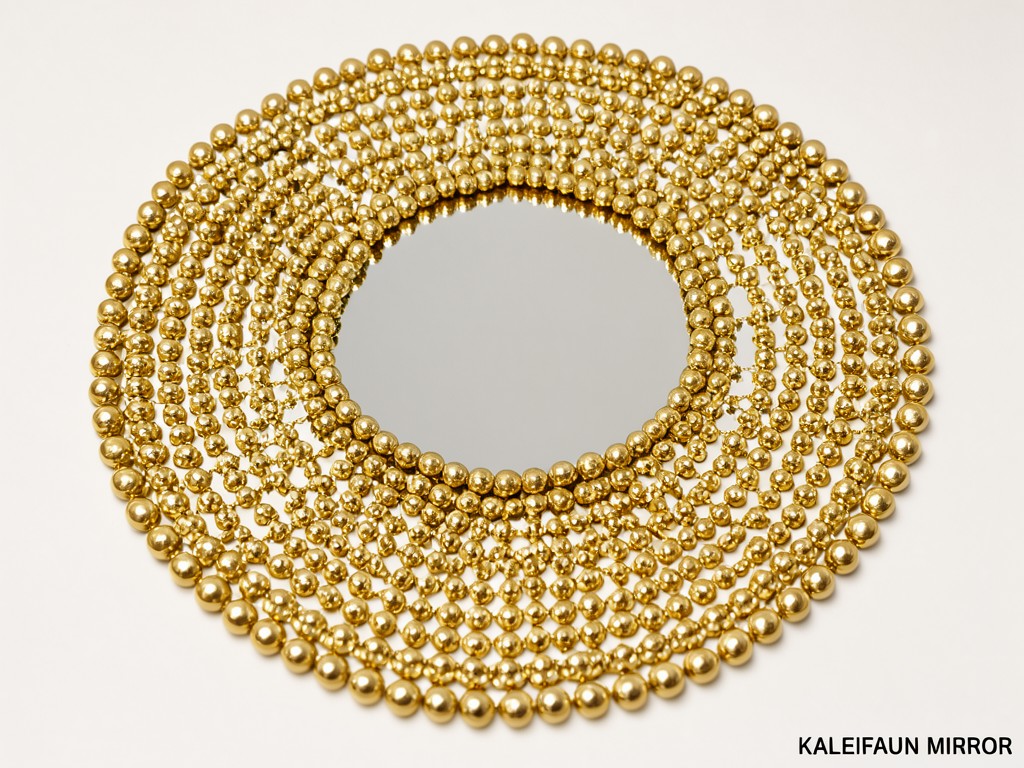
| Customization Area | Options to Define | Buyer Consideration |
|---|---|---|
| Mirror and overall size | Outside diameter, mirror opening, glass thickness | Confirm how the frame changes the visible mirror area and finished weight. |
| Frame and beaded edge | Frame material, depth, bead shape, spacing, and attachment method | Changes can affect profile uniformity, assembly time, and unit cost. |
| Gold finish | Colour reference, sheen, and finish route | Use one approved reference for initial production and repeat lots. |
| Back and export pack | Backing construction, hanging hardware, protective packing, retail label | Set carton and labelling requirements to match the destination and retail plan. |
Volume Planning and Lead Time
Moving from sample orders to container loads changes the cost picture and the amount of coordination required. Larger runs can spread setup and packaging costs across more units, but they also make clear specifications more important: drift in diameter, total weight, bead spacing, or gold shade affects more retail units and can complicate the next reorder.
Lead time depends on whether the design uses existing components or needs new frame or bead tooling, how quickly the sample is approved, and the packaging and destination requirements. To protect a launch date, align the approved sample, order quantity, artwork, carton details, and shipping window before production is booked. Ask for a schedule against those inputs rather than relying on a general catalogue estimate.
Request a Specification Review
Send the target diameter, reference finish, expected order volume, and required ship window for a review of the construction and production schedule. Discuss your circle beaded gold mirror specification before sample approval and order placement.