factory direct small round decorative wall mirror wholesale - Bulk Supply and Specification Guide
The complaint that repeats across reorders is often not a dramatic breakage: diameters vary, frame finishes shift in tone, or a hanger sits differently from one shipment to the next. Those small differences complicate shelf presentation and create avoidable returns when buyers expect the replacement piece to match the first order.
Repeat-order decision rule: approve a defined diameter, frame profile, finish reference, backing and hanger as one specification. A signed sample and agreed tolerances give the factory a practical reference for later production lots; changing any one of those details can change fit, appearance or packed weight.
Measured Performance in Real Use
A decorative wall mirror is judged first by a clear, undistorted reflection, then by whether its edge, frame and wall attachment stay presentable in the room where it is sold. For a small round format, a slightly off-centre mirror insert or uneven frame reveal is easy to notice because the circular outline gives buyers no straight edge to visually average out.
The cost trade-off sits between a simpler glass-and-frame build and added edge finishing or a more substantial frame. A lower-cost construction can suit short-term decorative use, while a defined edge finish and secure frame assembly make more sense for retailers who expect the item to move through several seasons and receive repeat orders.
Set the size tolerance, finish reference and hardware position before the purchase order. If those points remain open, two lots may both meet a broad description yet look inconsistent side by side.
Specification Range and Customisation Limits
Small round mirrors are commonly developed around diameters of roughly 200–400 mm, with the final range set by the retail format, glass availability, frame width and carton plan. Mirror glass thickness, frame depth and total weight are linked: increasing glass or frame mass can improve the product’s feel, but it also changes wall-hardware requirements and freight cost.
Specification limit: dimensions and finish can be agreed for production, but the frame profile, mirror insert, backing and mounting method must be assessed as a combined assembly. Confirm the finished outside diameter—not only the glass diameter—on the approved drawing or sample.
- Define whether the stated diameter means the mirror glass or the full frame edge.
- Record frame material and finish appearance with a physical sample or agreed colour reference.
- Set the hanger type and position to match the intended wall installation and packed orientation.
- Confirm finished weight and carton dimensions after the selected frame and protective packaging are fixed.
Option Comparison by Usage Level
Choose construction by expected handling and retail price, not by appearance alone. A narrow, simple frame reduces material use; a wider or more protective rim adds material and assembly steps but can shield the glass edge from routine contact. The suitable option depends on the balance between landed cost, display style and the level of handling the product will see.
| Construction route | Buyer benefit and trade-off | Best-fit order profile |
|---|---|---|
| Mirror glass with a polished edge and minimal frame detail | Keeps the outline visually light and limits frame material; the exposed edge needs suitable protection in handling and packing. | Price-led decorative ranges with controlled retail handling. |
| Mirror insert held by a metal rim | Adds a defined border and edge coverage. Finish consistency and rim fit need clear approval across repeat lots. | Mid-range home décor assortments where buyers want a visible frame finish. |
| Mirror insert assembled into a wood, MDF or moulded decorative frame | Allows a wider profile and more finish choices; added mass and frame joints affect handling, freight and the mounting specification. | Design-led collections where frame character supports the retail price point. |
What Can Be Customised and What Cannot
Buyers can usually specify outside diameter, frame material and profile, finish colour, backing details, hanger arrangement, packaging and retail artwork. These choices affect tooling, material procurement and assembly, so they should be frozen before repeat production rather than changed informally between orders.
Some properties have practical limits. A circular glass insert requires an edge finish suited to its frame or exposed-edge design; a heavier finished mirror needs a mounting method suited to its mass and wall conditions. Exact colour matching also depends on the selected frame material and finish process, so approve the actual finish sample instead of relying on a screen image.
Normally Specifiable
Diameter, frame profile, selected material and finish, hanger position, packaging layout, carton markings and private-label artwork can be set against the agreed product drawing and sample.
Requires Assembly Review
A change to glass size, frame depth, backing or hanging hardware can affect finished weight, edge coverage and carton fit. Treat these as linked design choices, not isolated substitutions.
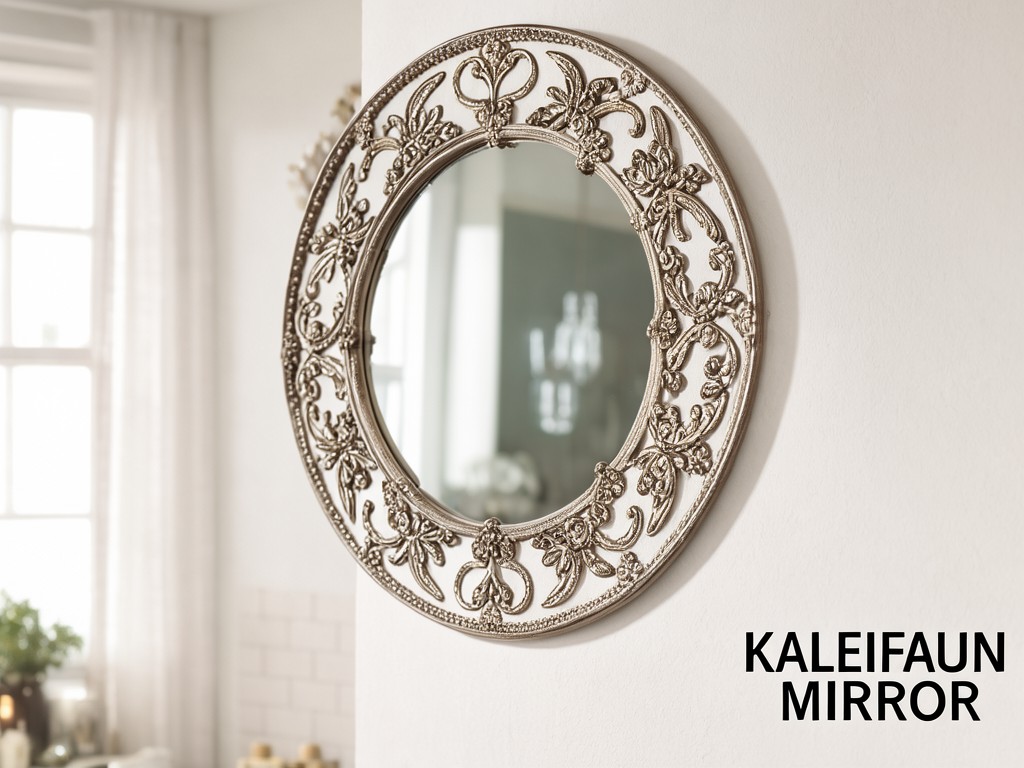
Usage Scenarios and Buyer Segments
Home décor distributors often need several frame finishes under one size family, with each variant kept visually consistent across replenishment orders. Retail procurement teams may favour a narrower frame and compact carton when shelf space and freight allocation matter more than a substantial frame profile.
Hospitality buyers selecting mirrors for guest rooms or powder areas should specify the intended installation surface and mounting hardware before production. A mirror sold for a low-contact bedroom display has a different handling pattern from one that will be installed in a frequently used shared space; neither use case removes the need for careful glass-edge protection.
| Use and handling condition | Complaint buyers may see | Specification that reduces the risk |
|---|---|---|
| Repeated wholesale replenishment across different production lots | Outside diameter or frame colour no longer matches the earlier shipment. | Record the finished diameter, agreed dimensional tolerance, finish reference and approved sample revision on the order specification. |
| Mixed-case export shipment with individual retail units | Chipped glass edge, scuffed frame or damaged carton at receipt. | Use edge coverage or a protective rim where appropriate, then specify a fitted inner pack and carton layout that prevents unit-to-unit contact. |
| Room installation with regular use of the wall-mounted mirror | Mirror shifts on the wall or the hanger does not suit the installation. | State finished weight, hanger type and position, and intended mounting surface in the product brief. |
| Damp room or frequent surface cleaning | Backing deterioration, frame finish change or moisture marks near the edge. | Select backing and frame finishes for the stated room conditions, and specify cleaning guidance that avoids prolonged moisture at exposed edges. |
OEM and ODM Programme Structure
An OEM order starts from a buyer-defined mirror, frame and pack specification; an ODM programme starts from a factory-developed construction that the buyer adapts for its range. For either route, a sample approval should capture the finished diameter, frame finish, hanger location, back treatment and retail presentation.
Artwork should be supplied as final, print-ready files with placement, colour references, barcode details and language versions confirmed by the buyer. Late changes to labels or carton graphics can affect the production schedule, while changes to glass, frame or hardware may also require a revised sample and cost review.
- Share target diameter, frame direction, order quantity, destination market and packaging expectations.
- Review the construction proposal, sample scope, branding files and any open specification points.
- Approve the reference sample and final order details before production booking.
- Keep the approved specification revision with reorder documents to reduce lot-to-lot drift.
Export Packaging and Handling Protection
Glass damage in transit often begins with movement inside the unit pack or contact between mirrors in the master carton. Use a protective layer over the reflective face, a formed or fitted support around the perimeter, and separators where multiple units share an outer carton. The exact combination depends on mirror diameter, frame shape, shipment route and carton quantity.
More packaging material adds cost and carton volume, so the goal is to restrain the mirror without loading pressure onto the glass or projecting frame details. Confirm the packed dimensions and gross weight with the final pack configuration; estimates based on an unpacked sample can distort freight calculations and case-pack planning.
For mixed finishes or sizes, identify each variant clearly on the inner pack and master carton. Clear carton markings reduce receiving errors when a distributor replenishes several similar round mirrors at once.
Setup, Use and Replacement Parts
Install the mirror with hardware suited to its finished weight and the wall surface; the supplied hanger alone cannot account for every installation condition. Keep the glass face and edge away from hard impacts, and avoid leaving water or cleaning fluid at the perimeter, where it may reach the mirror backing or frame joint.
For routine care, use a soft cloth and a cleaner appropriate for mirror glass, with liquid applied to the cloth rather than allowed to pool at the edge. Abrasive pads can mark frame finishes, and excess moisture can affect exposed backing or joints over time.
Replacement availability depends on the construction. A hanger or separate mounting component may be replaceable if the attachment design permits it; a bonded mirror insert or finished frame assembly is generally treated as a complete unit. Buyers who need spare hardware should request it as a separate line item when the original programme is quoted.
Review Artwork and Branding Before the Next Reorder
Send the target diameter, frame and finish reference, mounting preference, order quantity and packaging brief for an artwork-and-branding review. Aligning those details with the approved product specification helps limit presentation differences and avoid preventable returns on repeat orders.
Contact the factory team to review your mirror specification and branding files.