Wholesale Decorative Round Gold Mirror Factory: Specification, Ordering and Quality Notes
Scope of Supply and Physical Form
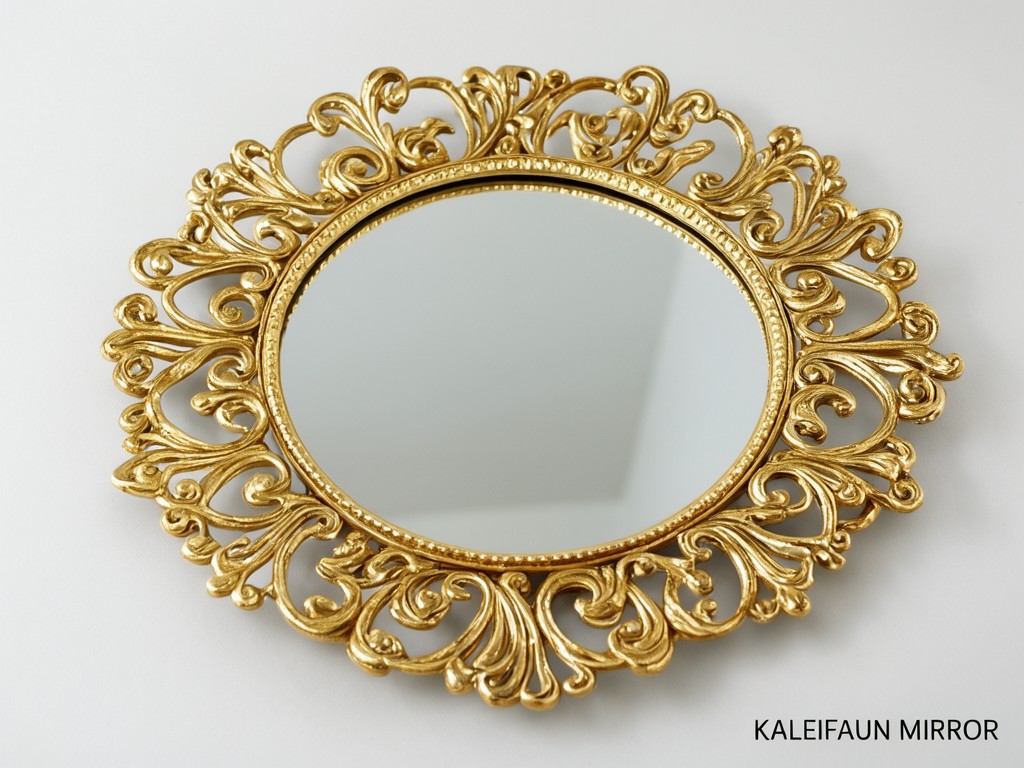
Returns often start with a mismatch between the approved sample and the delivered mirror: a shifted frame, inconsistent gold tone, or a mirror face that shows distortion under direct light. A wholesale decorative round gold mirror is typically supplied as a finished assembly: round silvered glass, a gold-finish frame, a backing or retention system, wall-hanging hardware, and protective export packaging.
For repeat orders, fix the outside diameter, glass diameter, frame profile, finish appearance, hanging orientation, and packaging configuration against an approved drawing or sample. Those details control fit and presentation. The production route commonly includes glass cutting and edge finishing, mirror backing application, frame forming and joining, surface finishing, assembly, and final inspection.
Packaged weight and dimensions matter alongside the visible face. The frame, backing, and protective inserts affect freight cost and how well the glass survives handling, so the shipping pack should be reviewed as part of the finished specification.
The Problem Buyers Keep Paying For
Fatigue appears at the stress concentration: frame joins, hanger attachments, and points where the glass or backing bears against the ring. If those areas move under handling or wall load, the finish can crack, the mirror can rattle, or the assembly can arrive out of round.
A thin frame can keep unit cost and shipping weight down, but it has less resistance to dents and local deformation. A heavier section adds stiffness, yet raises freight weight and can transfer more force to the hanger. The useful specification is not simply “thicker”; it is a frame section and attachment layout that hold the approved shape through packing, transport, and installation.
Finish complaints also follow predictable patterns. Incomplete coverage at joints or sharp edges can expose the substrate, while inconsistent pretreatment can cause peeling or visible tone differences between production lots. Buyers reduce repeat claims by approving the gold appearance under agreed lighting and checking the frame edges and joins, not only the broad front surface.
Measured Performance in Real Use
| Construction route | Trade-off | Checks that matter |
|---|---|---|
| Formed steel frame with a gold powder-coated finish | Can provide a firm ring at a controlled material cost. The added frame weight affects freight, and exposed or poorly covered edges can become finish weak points. | Ring roundness, joint alignment, coverage at edges, finish adhesion, and hanger attachment security. |
| Formed aluminum frame with a gold anodized finish | Lower frame mass can reduce shipping weight. The visible color depends on alloy and finishing control, so batch-to-batch tone approval needs close attention. | Profile dimensions, ring shape, surface consistency, color against the approved reference, and secure glass retention. |
Weight and stiffness trade off against each other. A lighter frame can ease freight handling, but it must still resist shape change around the hanger and glass support. Mirror performance also depends on the glass: cut dimensions, edge condition, backing integrity, and reflection appearance should be checked against the agreed sample and drawing rather than judged by frame appearance alone.
Repeated loading drives the failure when the mirror shifts during handling or the hanging points carry uneven load. A stable retention system limits glass movement; a properly supported frame reduces stress at the joints. The factory should verify overall dimensions, roundness, hanging-point position, and assembly fit before packing.
Quality Control and Batch Consistency
Incoming Components
Check glass dimensions and edge condition, frame material and profile, finish appearance, backing parts, and hanging hardware against the approved specification. Incoming checks catch material substitutions before they reach assembly.
Finished Assembly
Inspect the mirror face for visible distortion or damage, compare the gold finish with the approved reference, verify ring shape and assembly fit, and confirm the hanger and protective pack match the order record.
A sample approval is useful only if production uses the same reference for color, frame profile, glass position, and packaging. Keep the approved sample or controlled images with the specification, and record batch identifiers so a complaint can be traced to the glass, frame finish, assembly, or packing stage.
For finish checks, compare parts under consistent lighting and inspect likely weak points such as welds, cut edges, and recessed areas. For transit protection, inspect a packed unit after handling checks agreed for the order; glass breakage often points to movement inside the carton or inadequate separation, not just insufficient outer-board strength.
Setup, Use and Replacement Parts
During installation, use wall fixings suited to the wall substrate and the packaged mirror weight. Confirm that both hanging points engage as intended, where the design uses two points, and that the frame sits flat without pressure on the glass edge. Incorrect fixing or a twisted support can put load into the frame and create movement that later appears as a loose mirror or cracked joint.
Clean the glass with a soft cloth and a cleaner suitable for mirror surfaces. Keep liquid away from the frame seams and rear edge; moisture that reaches the reflective backing can cause deterioration at the perimeter. Avoid abrasive pads on the gold finish, since scratches are especially visible on the frame face and corners.
| Order factor | MOQ basis | Lead-time control |
|---|---|---|
| Existing frame profile and finish process | Set by production lot size, material availability, and the supplier’s minimum finishing run; confirm by SKU in the quotation. | Depends on frame material, finish slot, glass availability, and order quantity. |
| New tooling, sample approval, or a new pack configuration | May require a separate setup quantity or tooling charge; define these terms before sample release. | Allow time for drawing confirmation, sample review, material procurement, production, and export packing. The confirmed schedule begins after required approvals. |
For replacement support, identify the item by SKU and batch, then specify whether the required part is glass, frame, hanger, or packaging component. Glass and frame assemblies are not always interchangeable across production revisions, so confirm dimensions and attachment details before arranging a replacement.
Discuss Your Project
Share the target diameter, frame construction, approved gold-tone reference, quantity by SKU, packing requirements, and delivery window. A project review can align the sample, inspection points, MOQ basis, and production schedule before a repeat order is released.
Contact the factory to discuss specifications and repeat-order controls.