wholesale large gold round wall mirrors factory: Specification, Ordering and Quality Notes
Unit price and service life diverge when a large mirror moves from a dry bedroom into a hotel bathroom or another humid interior. Glass diameter, backing protection, frame material and gold finish all affect the landed cost, but the cheapest frame can cost more per unit sold if finish damage or difficult replacement leads to returns. Set the exposure and serviceability requirement first, then compare like-for-like constructions.
For OEM buyers and brand product managers, repeatable dimensions and a stable frame-forming process matter as much as the first order price. A larger run spreads forming fixtures and setup across more pieces; a smaller order may carry a higher unit cost or a longer queue if the diameter, profile or finish needs a new setup. The practical decision is whether the anticipated reorder volume supports a dedicated configuration rather than a one-off specification.
Scope of Supply and Physical Form
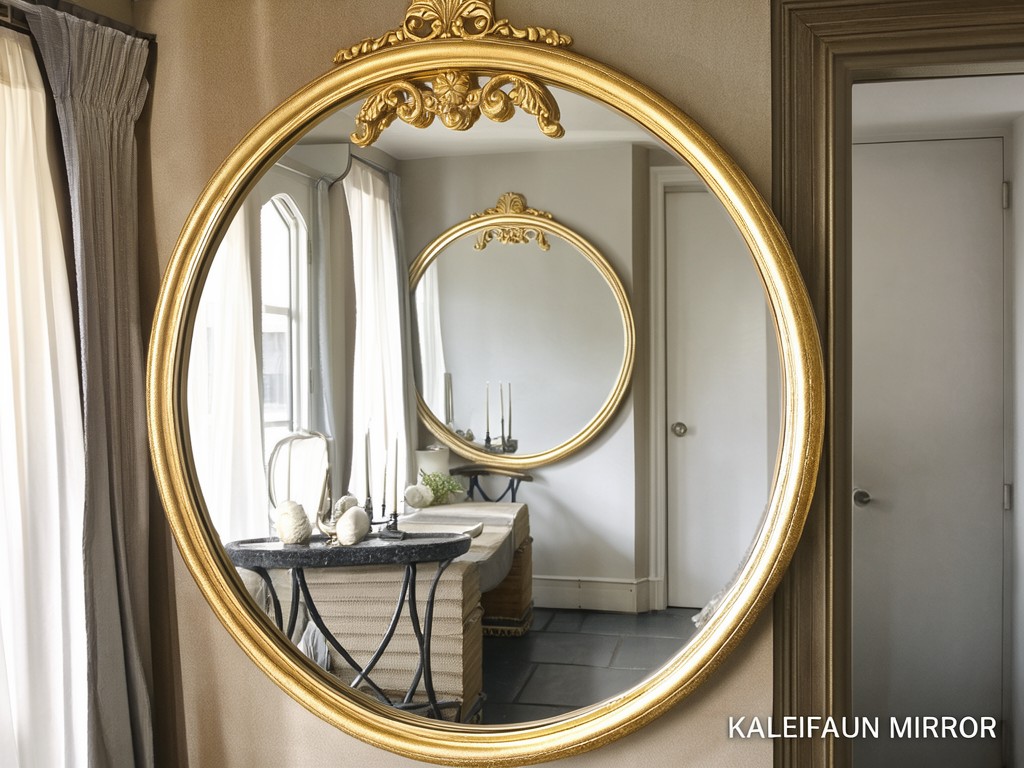
A wholesale large gold round wall mirror typically comprises a circular silvered-glass panel, a formed metal frame, a rear protection layer and wall-hanging hardware. Diameter, glass thickness, frame depth and the position of the hanging points should be fixed in the approved drawing; otherwise, cartons, hardware and installation instructions may not match the final production run.
| Use level | Typical placement | Specification decision |
|---|---|---|
| Residential, dry interior | Bedroom, entryway or dressing area with ordinary indoor humidity. | Prioritise the requested diameter, frame profile and finish appearance; avoid paying for humidity protection the placement does not require. |
| Commercial, frequent daily use | Hotel rooms, salons or retail fitting areas with regular handling and cleaning. | Specify a finish and rear construction suited to the cleaning routine, plus packaging that limits frame scuffing and glass movement in transit. |
| Humid interior | Bathroom or coastal property interior where moisture exposure is more frequent. | Discuss sealed glass edges, backing protection and frame-finish limits; an indoor mirror should not be represented as suitable for direct weather exposure. |
Diameter and glass thickness vary by design and mounting plan. Many ranges use diameters around 600–1200 mm and glass around 4–5 mm, but these are quotation starting points, not a fixed specification. Confirm the actual dimensions, frame depth, overall weight and wall-fixing arrangement against the intended installation.
What the Design Has to Balance
Large diameter increases glass area, carton size and the leverage applied to the hanging points. A narrow decorative frame can preserve a light visual profile, but it leaves less room to conceal fixings and protect the glass edge. A deeper or wider frame adds material and freight volume; choose it when the design needs a more substantial edge or a defined mounting structure.
Serviceability rule: if the mirror must be replaceable without discarding the frame, specify a retention method that permits glass removal and confirm access to the relevant fasteners. A permanently bonded assembly can simplify construction, but replacement may require a full unit rather than a glass-only part.
Gold is a frame finish, not a property of the reflective coating. Colour match, sheen and edge coverage depend on the selected finish process and frame geometry. For humid rooms, agree on the intended exposure and finish specification before sampling; do not treat a gold appearance alone as evidence of weather resistance.
Material Options and Their Trade-offs
Frame material changes piece weight, forming steps and freight cost. The best option depends on the target diameter, profile detail and the gold appearance required; quote the same drawing and finish intent across alternatives before comparing unit prices.
Aluminum Frame
A lighter frame can reduce shipped weight and ease handling at larger diameters. Extruded or formed profiles suit consistent section geometry, while profile and finish choices can limit the range of decorative shapes. A coating chip still exposes the substrate and should be addressed in the finish specification.
Steel Frame
Formed steel supports a range of shaped profiles and can suit a more substantial frame appearance. It adds weight, and exposed or damaged finish areas need attention where humidity is present. Forming dies or jigs may add setup cost, which becomes easier to absorb as the order quantity rises.
Gold powder coating and plated finishes are not interchangeable price options: they differ in appearance, process route and repair approach. State the preferred sheen and colour reference, and approve a physical finish sample before placing a repeat order.
Comparing Two Standard Configurations
Before comparing quotations, separate a value configuration from a service-oriented one by construction rather than by a broad quality label. A value build may use a standard diameter, a simpler frame profile and a fixed rear assembly; it limits setup changes and can suit planned retail volume. A service-oriented build may add a removable glass-retention system, specified rear protection or a finish selected for more frequent cleaning, with added components and assembly time in the quote.
Two suppliers quoting the same specification can still price differently if one has existing forming tooling and the other must develop a new fixture or profile setup. Ask which tooling cost is included, whether it is amortised across the order, and what quantity assumption supports the quoted lead time. A custom profile can make sense at forecast volume; for a short run, a stocked frame section may protect margin without changing the mirror’s key dimensions.
How to Choose Before Requesting a Quote
A quote becomes useful when the factory can price a fixed construction and a defined order scenario. Provide the points below together; revisions to diameter, profile or finish after tooling review can change both setup cost and the production window.
- Specify outside diameter, glass thickness, frame width and depth, overall weight target if applicable, and the drawing revision.
- Identify frame material, gold finish type, colour reference and sheen. State whether the mirror is intended for a dry room, humid interior or another defined placement.
- Choose a fixed or replaceable glass assembly, then define the rear protection and wall-hanging hardware required for the sales market.
- Share the first-order quantity, forecast reorder volume, carton requirement and target shipping window so setup and tooling can be assessed against expected sales.
For a new profile, request a tooling review before approving the sample route. The review should clarify any one-time fixture or forming cost, the quantity over which it is allocated, and whether a standard profile can meet the same visual and mounting requirements.
Packing, Marking and Freight Configuration
Large round mirrors need packaging that restrains the glass and separates the finished frame from contact points. Confirm the inner protection, corner or edge support, carton dimensions and stacking plan against the packed unit; an oversized carton can raise freight cost, while insufficient clearance can leave the gold finish exposed to rub marks. Agree whether each mirror ships assembled or with hardware packed separately.
Retail or importer marking should be settled before production. Provide the required product label, carton marks, barcode artwork and language files, and identify which information belongs on the mirror, inner pack or master carton. Keep a record of the approved drawing, finish sample and packing specification so repeat orders do not default to a different frame or carton setup.
Tooling-review inquiry: Send the target diameter, frame section or reference drawing, finish choice, order quantity and forecast volume for a tooling and cost review. Contact the factory to review the specification and quotation basis before sample approval.