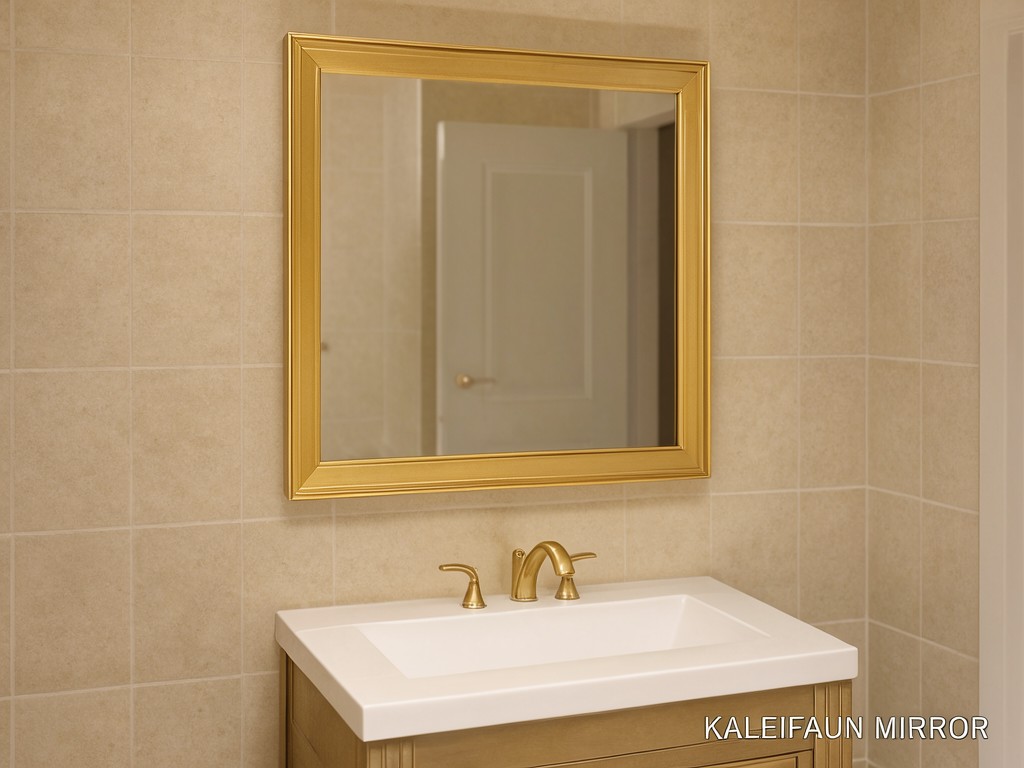
Specifying wholesale square gold bathroom vanity mirror factory for Wholesale and OEM Orders
A square mirror with chipped corners or a gold frame that varies visibly between cartons can drive replacement costs above the initial unit-price saving. For wholesale orders, the practical cost measure is replacement rate across the season, not the quoted price of one unit.
Tooling amortisation also changes the calculation: larger, repeat orders spread frame and fixture setup costs over more pieces, while small runs may carry a higher unit cost and require more time for finish approvals. Set the approved size, frame profile, and gold tone before comparing factory quotes.
Design Constraints Behind the Specification
A square outline makes small errors easy to see. Unequal diagonals, inconsistent corner radii, or a frame that sits out of square can create a visible gap against the wall even when the mirror glass itself is usable. Confirm the finished outside dimensions, glass size, frame width, and mounting position on one approved drawing.
The usual construction sequence combines cut and edge-finished mirror glass with a formed or fabricated frame, a gold surface finish, and rear mounting hardware. Bathroom humidity makes frame joints, cut edges, and the mirror backing relevant to service life. Specify the intended room conditions and the permitted finish variation; the factory can then quote a process suited to that use rather than price an undefined “gold” appearance.
Specification rule: approve one physical reference sample for the gold tone, frame profile, corner treatment, and rear fixing layout. A colour name alone does not define the appearance across different finish processes.
Measured Performance in Real Use
For a vanity mirror, the useful checks are dimensional agreement, a clear reflection, a clean edge, secure frame joints, and a finish that suits the humidity and cleaning routine. The table compares common finish routes; actual appearance and service behaviour depend on the specified frame substrate, surface preparation, and production controls.
| Finish and colour route | Appearance control | Use and cost trade-off |
|---|---|---|
| Gold anodized aluminum frame | Colour is tied to the anodizing process and alloy; confirm tone and sheen against a production-representative sample. | Often suits repeat profiles and larger runs. Profile tooling and finish setup add cost at low quantities but can be amortised over repeat orders. |
| Gold PVD finish on stainless steel | A controlled coating route can produce a consistent metallic look; shade and reflection still need approval against the chosen substrate and surface preparation. | Can suit buyers prioritising a metal finish and a particular frame feel. Processing and minimum batch economics may raise the unit cost on short runs. |
| Gold powder coat on a formed frame | Offers a broader choice of sheen and colour appearance; corner coverage and coating thickness depend on frame geometry and application setup. | Useful when colour matching is a priority. Confirm how the finish handles the intended cleaning products and check that edges and joints are included in the approved sample. |
For private-label reorders, retain the approved finish sample and its process description with the product drawing. That gives both parties a reference when a new production lot needs to match an existing retail range.
Buying Mistakes That Lead to Returns
A low quote can become expensive when the specification leaves room for interpretation. The most common return triggers are visible differences between the approved sample and production units, mounting hardware that does not suit the installation, and damage at corners or exposed glass edges.
- Do not order by nominal mirror size alone. State whether the measurement refers to glass or finished outside dimensions, then confirm frame width and corner geometry.
- Do not treat “gold” as a fixed colour code. Approve the sheen and tone on the actual finish route, especially when several sizes will share one retail assortment.
- Do not assume wall fixings are interchangeable. Match the fixing positions and supplied hardware to the intended wall installation before artwork and product details are final.
- Do not request a late frame-profile change after tooling approval. New forming or assembly fixtures can alter cost and lead time, even when the mirror outline stays square.
Customisation Options and Their Limits
Keep the base construction fixed if the goal is to match an existing private-label specification. Changes to colour or branding usually affect fewer production steps than changes to the frame section, glass dimensions, or mounting layout.
Selection Decision Tree
- If the approved mirror size and frame profile already exist, retain them and confirm the gold finish sample before requesting a price revision.
- If the finish remains unchanged, repeat production can usually avoid new profile tooling; confirm current capacity and the order schedule.
- If the gold tone changes, allow time for sample approval and process confirmation before the production slot is fixed.
- If a new outside dimension is required, confirm whether the frame can use existing profile tooling before commissioning a new section or fixture.
- A size adjustment within the existing construction may need drawing and setup updates.
- A new frame profile can add tooling cost and approval time; a larger committed order spreads that cost across more units.
- If branding is required, provide the logo artwork, placement, and any colour reference with the inquiry. Keep branding separate from the mirror viewing area unless the design specifically calls for a glass mark.
Order volume affects both unit economics and scheduling. A larger run can spread tooling and finish setup costs, but it still needs a confirmed sample and production slot; a small trial quantity reduces inventory exposure but may carry setup charges and a longer wait for a consolidated finish batch.
Who Uses It and Where It Matters
Bathroom fixture distributors choose square gold vanity mirrors for coordinated collections where frame tone, outside dimensions, and mounting positions need to remain consistent across several product lines. A fixed specification helps sales teams replace a damaged unit without changing the look of the installed range.
Hotel and serviced-apartment purchasing teams typically need a repeatable appearance across multiple rooms, plus a frame and mirror backing suited to regular bathroom use. Their buying decision should account for the cleaning routine, installation method, and replacement availability over the property’s fit-out cycle.
Private-label importers often prioritise a close match to an existing retail specification over a redesign. In that case, the approved sample, drawing revision, finish description, and mounting details should travel together from quotation through reorder approval.
How Consistency Is Held Across Batches
Batch consistency starts with a controlled specification, not a final visual check. The factory should link the approved drawing to the glass dimensions, frame profile, finish route, corner details, and hardware configuration used for the order.
For repeat orders, keep the same drawing revision and approved finish reference unless the buyer authorises a change. If a process or supplier input changes, record the proposed difference and obtain buyer approval before production; otherwise, a replacement batch may fit the dimensions but miss the original gold tone or frame appearance.
Request a quotation against the current specification, including order quantity, target ship window, finish sample requirements, and branding files. To review artwork and branding before pricing is locked, send the specification for an artwork-and-branding review.