Wholesale wall mirror circle sun decor Factory - Bulk Supply and Specification Guide
A retail launch date can slip because a carton arrives with cracked glass, bent sunburst rays, or a finish that differs from the approved sample. For importers and distributors, those problems start well before dispatch: the drawing, material choices, sample sign-off, and packing method all need to match the product intended for sale.
Where Cheaper Alternatives Fall Short
Repeated carton handling drives failures that may not show on a showroom sample. Thin metal rays can bend under side pressure; weak joints can loosen after vibration in transit; and a mirror without enough edge protection can chip when the carton takes a corner impact. A lower unit price offers little value if replacement stock misses the store reset.
Finish is another return trigger. A light coating over poorly prepared metal can show scratches or uneven colour near joints, while an unprotected rear surface can scuff against the glass during packing. These defects are often tied to the construction and pack-out choices, not the sunburst style itself.
What the Design Has to Balance
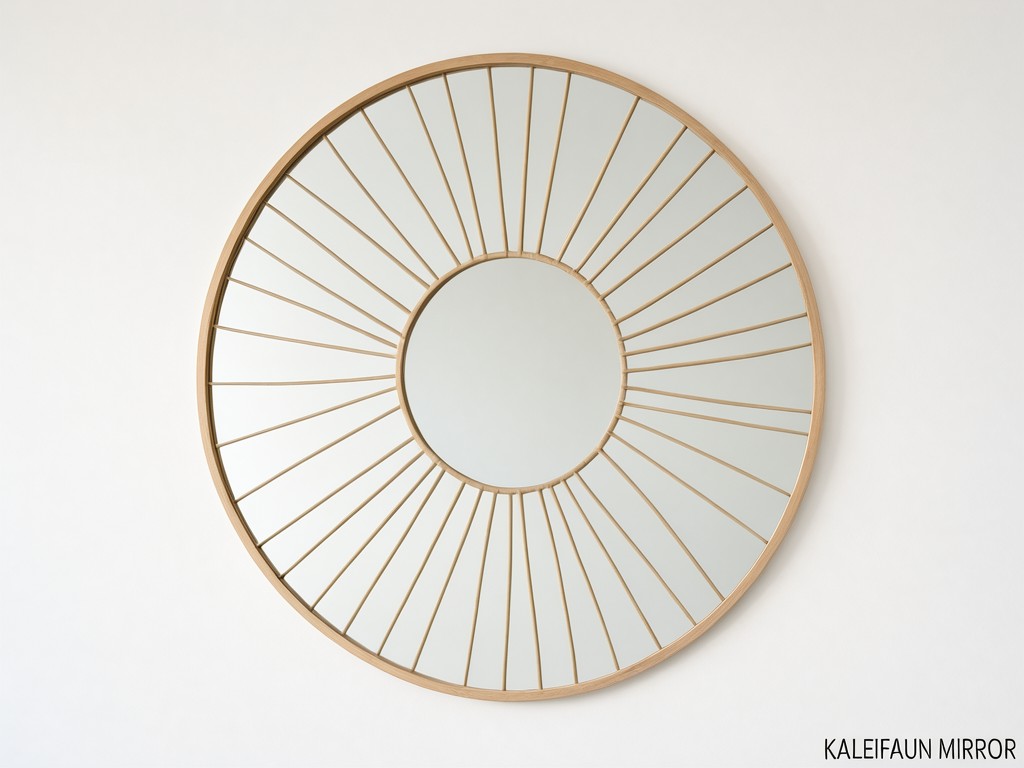
Fatigue appears at the stress concentration where rays meet the central frame, especially when a large mirror is repeatedly moved or packed without support around the perimeter. More metal at the joint can reduce flex, but it adds weight and cost. A clean drawing should show the ray count, attachment points, overall diameter, and distance the frame projects from the wall.
Weight and stiffness trade off against each other. A heavier steel frame can hold long rays more firmly, while a lighter aluminum construction can ease handling and lower freight weight; the best choice depends on the diameter, ray profile, finish, and target retail price. Use this selection path before requesting a production sample:
- Set the finished outside diameter and central mirror diameter separately; annotate both on the same drawing.
- If the rays are long or slender, review steel gauge and joint support against the required wall projection.
- If lower shipping weight is the priority, review aluminum construction and confirm that the sample retains the intended ray alignment.
- Choose the finish from a physical colour reference where possible; approve the sheen and colour on the assembled sample, not only on a flat coating chip.
- Sign off the mirror, frame, hanger position, and protective pack-out as one configuration before the order is released.
Specification Range and Customisation Limits
Most wholesale designs are built around an overall diameter of roughly 300–900 mm, with mirror glass commonly around 3–5 mm thick. These are planning ranges, not fixed tooling limits. Larger diameters, deeper rays, and heavier glass change the frame support and carton layout, so confirm those dimensions together rather than revising them after sample approval.
Approval Point That Protects the Reorder
Record the overall size, mirror size, ray layout, metal type, finish reference, hanger position, and pack-out on the approved drawing or sample record. Any change to one of these details can alter the look, hanging position, unit cost, or carton fit.
Custom artwork usually applies to retail packaging, labels, or inserts; it does not automatically change the frame finish. Provide print-ready files with the intended colour references and confirm carton marks before production. Where a custom ray profile or unusual finish needs extra sample rounds, include that approval time in the launch schedule.
Buying Mistakes That Lead to Returns
A common mismatch is quoting by mirror diameter when the retailer has planned shelf space around the full sunburst diameter. That difference affects display fit and carton size. Specify both measurements, plus the frame projection from the wall, in the purchase documentation.
Do not approve a finish from a small image alone. Screen colour can shift, and a coating sample on flat metal may look different from the same finish across welded or joined rays. Approve an assembled sample under suitable lighting, then state that approved reference in the order file. Also settle whether hanging hardware is included and how it is fixed to the frame; wall materials differ, so the product specification should not imply a universal wall load.
Finally, review the packed unit rather than assuming a visually tidy sample will ship safely. Glass protection, separation between the frame and mirror face, and outer-carton dimensions all affect freight handling and the landed cost.
Usage Scenarios and Buyer Segments
Home décor importers often select sunburst mirrors for coordinated seasonal ranges, where consistent finish and repeatable outer dimensions matter across multiple sizes. Furniture and gift distributors may prefer a compact design that can sit in a mixed-product shipment without oversized cartons taking up the available freight volume.
Retail buyers planning a store launch need the production sample, packaging artwork, and carton configuration approved early enough to book freight against the launch window. For private-label programs, lock the logo placement and language on the label or insert before printing; late artwork changes can hold an otherwise approved product.
Volume Planning and Lead Time
Launch schedules depend on more than assembly time. A standard frame and existing finish can move through sampling and production with fewer approval steps; a new ray pattern, custom coating, or printed packaging adds review time and may require a revised sample. The indicative planning ranges below need confirmation against the selected size, finish, order quantity, and material availability.
| Planning item | Indicative range | What changes the schedule |
|---|---|---|
| Pre-production sample | About 7–14 days after drawing and finish details are agreed | New frame tooling, non-stock finishes, or additional approval rounds |
| Initial wholesale order | Often 100–300 units per design as a starting MOQ range | Size mix, finish batch, packaging requirements, and component sourcing |
| Production after sample approval | Commonly 30–45 days | Order volume, approved artwork, material availability, and packing configuration |
To protect a fixed ship window, share the target arrival date, destination, order split, and artwork status with the initial inquiry. The factory can then confirm whether the requested sample and production sequence fits the launch plan before quantities are committed.
Request a Specification Review
Send the target dimensions, finish reference, quantity by design, packaging needs, and required ship window for a review before sampling. Contact the factory to review your drawing and launch schedule.