Affordable black vintage wall mirror: What Buyers Should Check Before Ordering
What This Product Is and Where It Fits
On a club programme that reorders twice a season, a black vintage-style wall mirror has to match the approved room scheme and arrive with its glass, frame and hanging hardware intact. Buyers generally choose this format for changing areas, studios, reception spaces and retail interiors where a dark frame and aged-look detailing suit the fit-out. “Vintage” describes the appearance; it does not, by itself, mean reclaimed materials or a specific historical construction.
Most versions pair mirror glass with a black-finished frame and a rear support or hanging arrangement. The price and handling risk depend on the frame substrate, glass size and thickness, edge treatment, backing, and the way the complete unit is secured for freight. For facilities with humid changing rooms, the specification should state where the mirror will be mounted: an indoor wall product is not automatically suitable for outdoor exposure, splash zones or persistent condensation.
How to Choose Before Requesting a Quote
Agree the finished size, frame profile and installation method before comparing unit prices. A quote based on overall frame dimensions can differ from one based on visible glass area; record both on the drawing. For a repeat programme, approve a physical sample against the intended black shade, finish sheen, corner details and hanging position, then retain that sample or its signed reference as the production benchmark.
| Specification point | Options to settle | Approval basis |
|---|---|---|
| Overall size and profile | Width, height, frame depth, profile shape and visible glass area | Dimensioned drawing with agreed tolerances and measurement points |
| Glass and rear construction | Glass thickness, edge finish, rear support and any safety backing requested for the market | Approved sample and written construction specification |
| Frame finish and installation | Black tone, sheen, vintage detailing, mounting points and included hardware | Colour or finish reference, hardware layout and approved artwork where applicable |
A cost comparison only holds when both offers use the same drawing revision and packing basis. Confirm whether the quoted dimensions include decorative moulding, whether hanging hardware is supplied, and whether the export carton is included in the unit price.
Assumptions Buyers Should Stop Making
A low purchase price does not show how the mirror will behave in a damp room or after repeated handling. A black coating over a moisture-sensitive frame can mark or swell if water reaches an unsealed edge; a metal or polymer frame may suit that location better, but can change the look, weight and cost. Specify the room conditions and cleaning routine rather than relying on a general “weather resistant” description.
Likewise, a sample approval does not control production if the approved sample, drawing and colour reference describe different versions. Lock the final revision, tolerance points, finish reference and packaging configuration in one approval record. Changes made after that point can affect both the quoted price and the repeat-order match.
What Can Be Customised and What Cannot
Frame dimensions, profile, black finish, decorative detailing, backing and hanging arrangement can usually be defined for an order. The practical limits come from the selected frame material, glass size, available forming or machining process, and the need to protect the finished mirror in transit. A request for an unusual profile or a new moulding can add sampling time and setup cost; confirm those costs before approving the production sample.
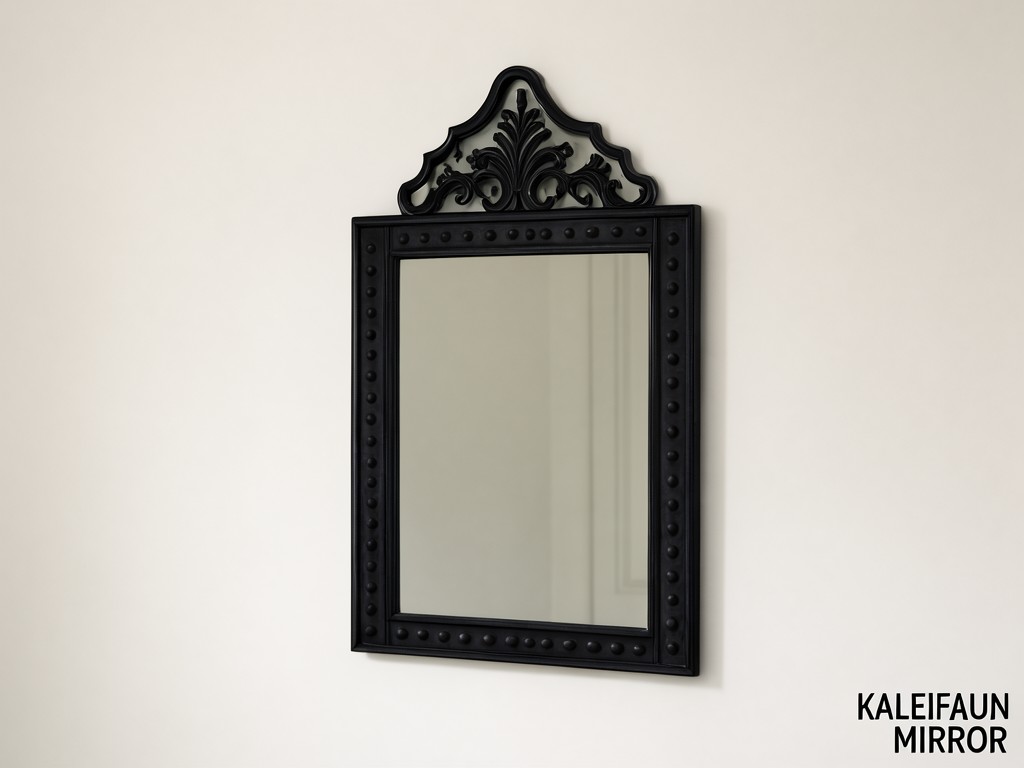
Cost-led frame specification
A standard frame profile and established black finish reduce setup changes and make replenishment easier to quote. This route fits buyers who can use an existing size and accept a defined finish reference instead of requesting a new decorative feature.
Location-led construction
Where humidity or frequent cleaning is expected, discuss the frame substrate, sealed edges and rear protection before fixing the design. Added protection can raise material and assembly cost; it does not turn an indoor mirror into an outdoor product.
Treat the signed drawing and approved physical sample as a matched pair. If the finish, profile or hanging layout changes, issue a revised drawing and obtain approval before the production run.
Requirements by Buyer Segment
Retail buyers need the retail-ready size, finish and carton information to align with their assortment and shelf or fulfilment plan. Artwork, barcode placement and carton markings should be supplied in the agreed file format and checked on a proof before printing. A change to the label or carton after approval can create a separate setup step even when the mirror itself remains unchanged.
Club or academy purchasing managers tend to prioritise safe installation and consistent replacements across rooms. Confirm wall type, mounting points, mirror orientation and whether the buyer or supplier provides fixings. For changing rooms with regular cleaning, identify the cleaning products and likely moisture exposure so frame material and edge sealing are chosen for the actual location, not just the product photograph.
Volume Planning and Lead Time
Moving from sample orders to container loads changes the planning questions. The factory needs the confirmed quantity by size and finish, the packing method, destination and required ship window before it can set a production schedule. A standard frame and existing finish generally involve fewer preparation steps than a new profile, custom colour match or printed retail carton.
Lead time should be quoted against the approved specification, not the first enquiry. Allow for sample review, drawing sign-off, artwork approval where required, material availability, production, packing and freight booking. The order confirmation should identify the point at which specification changes may affect the delivery date or unit cost.
Keeping Repeat Orders Supplied
When a brand extends an existing range, preserve the approved frame profile, black finish reference, glass specification and carton artwork under one revision-controlled record. An earlier order number alone is not enough if a supplier has changed a material source or the buyer has revised the room standard. Keep the original sample or clear reference images with the drawing so reorder discussions start from the same specification.
Finished-goods availability depends on whether the same size and construction are held as stock or made to order. Do not assume that commonly available glass means a finished mirror is ready to ship: frame components, assembly, labels and protective cartons may still need to be scheduled. For seasonal replenishment, share a forecast and confirm which specification and packaging version apply to each release.
Export Packaging and Handling Protection
Glass breakage and frame-corner damage are the main freight concerns for this product. Agree the protective separation around the glass, corner protection, carton strength and unit orientation for the planned shipping route. Larger mirrors need particular attention to movement inside the carton; a snug fit should protect the frame without placing concentrated pressure on the glass.
For container or pallet shipments, confirm carton dimensions, stack direction, pallet pattern and any handling marks before the packing specification is released. Retail labels and batch references should remain legible after transit. If the destination warehouse has limits on carton size or manual handling, provide those requirements before the pack-out is finalised.
Request a specification review
Send the target dimensions, installation location, frame and finish reference, order quantity and destination details for a quote based on a defined construction. Contact us to review the drawing, sample and packing requirements before production approval.