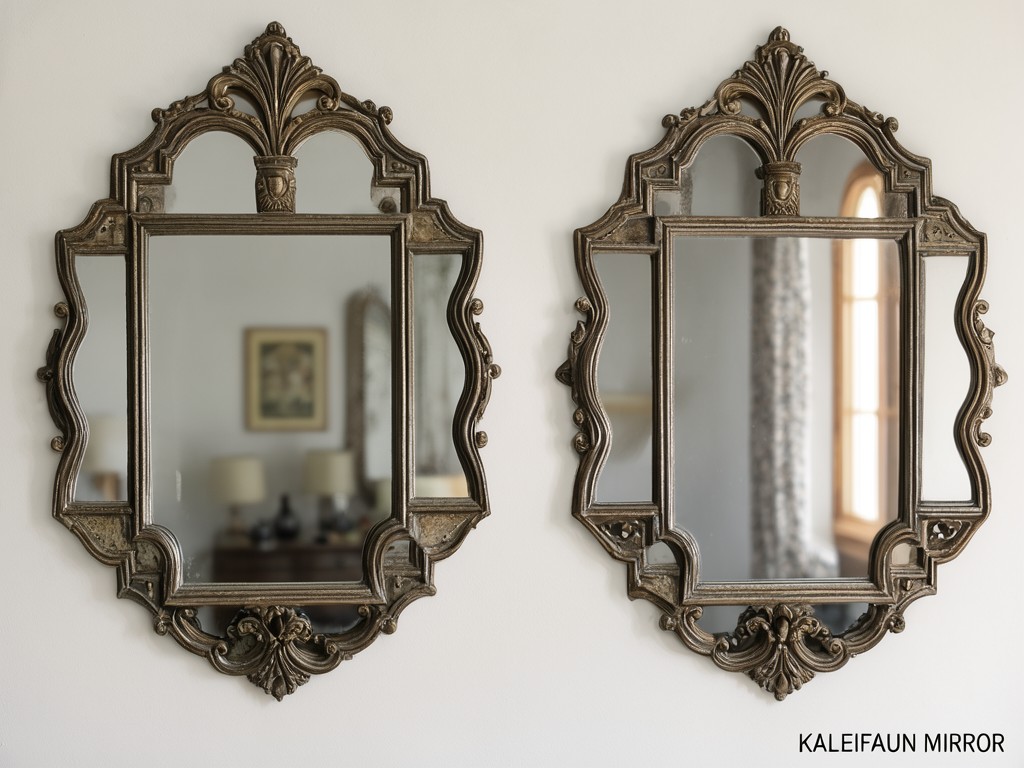
Custom antique decorative wall mirrors China Supplier: What Buyers Should Check Before Ordering
Unit price settles the question only after the mirror’s construction and inspection scope are aligned. For an OEM or private-label order, returns often start with inconsistent distress patterns, exposed edges that darken in damp conditions, or frames that do not sit flat against the wall.
Compare the same glass thickness, mirror dimensions, frame material, antiquing layout, and backing before comparing quotations. A lower price can reflect a thinner mirror, a simpler rear coating, or less control over the visual variation between pieces. Those differences affect the look on display and the cost of replacing damaged or mismatched units.
Design Constraints Behind the Specification
Two suppliers quoting the same specification may deliver different-looking mirrors. Antique effects are created on the reflective backing, so the pattern depends on the glass surface, the distressing method, and how the protective rear coats are applied. A reference sample should define the acceptable range of mottling, clear reflection, and edge treatment rather than imply that every piece will have an identical pattern.
Set a visual boundary, not a promise of uniformity. Approve a master sample and state which areas may vary. Keep the mirror’s overall tone and distress density within the agreed appearance range, while allowing for the handmade or chemically varied character of the finish.
For hotel interiors, retail displays, and shared rooms, specify the expected humidity and cleaning routine. Decorative antique mirrors are generally intended for indoor use; persistent moisture can attack exposed edges or damage a frame finish unless those areas receive suitable protection.
Construction Method and Its Effect on Consistency
A typical production route starts with cutting and edge finishing the glass, followed by application of the reflective layer, controlled antiquing, and protective backing coats. The frame is produced and finished separately, then the mirror is fitted and checked for alignment. Defining this sequence helps the buyer identify where a change in process could alter the appearance or increase rejects.
The factory can compare the production sample with the approved reference under consistent lighting, check overall dimensions and squareness, inspect edge finish and backing coverage, and verify frame joints and hanging hardware. Keep the approved material and finish records tied to each batch; otherwise a reorder may use a different glass source, coating sequence, or frame stain.
More elaborate frame profiles and hand-applied finishes add labor and make close visual matching harder. A simpler repeatable profile may cost less per unit and reduce batch variation, while a custom carved or distressed frame can better match a collection but needs a signed-off sample and clear acceptance criteria.
Specification Range and Customisation Limits
Treat the following as a quoting framework, not a universal standard. Finished weight changes with the mirror area, glass thickness, frame depth, and backing structure; confirm the production drawing before setting a freight or installation allowance.
Glass Thickness
Common quotation options are 3–6 mm. Larger panels and heavier frames may call for a thicker specification, subject to the design and mounting method.
Typical Size Range
Custom formats commonly start around 300 × 400 mm and can extend to about 900 × 1,200 mm, depending on frame construction and installation requirements.
Finished Weight
Small framed pieces may weigh a few kilograms; larger framed formats can exceed 15 kg. Use a production sample to confirm the actual unit weight.
Frame Materials
Options may include wood, metal, or moulded resin. Material choice changes frame weight, edge detail, finish options, and cost.
| Usage Level | Indicative Size and Weight | Material and Specification Focus |
|---|---|---|
| Small retail or guest-room accent | About 300 × 400 to 500 × 700 mm; finished weight depends on frame depth and material. | Specify frame finish, backing coverage, and a repeatable distress pattern for adjacent units. |
| Large lobby, lounge, or feature-wall installation | About 600 × 900 to 900 × 1,200 mm; weight can exceed 15 kg with a substantial frame. | Confirm glass thickness, frame rigidity, hanging points, and wall-fixing requirements against the finished drawing. |
Do not approve dimensions from the glass alone. The finished outside size includes the frame, and small changes to a profile can affect both the wall footprint and the feel of the edge when handled.
Customisation Options and Their Limits
Private-label programs can customise the mirror shape, frame profile, finish colour, distress pattern, backing, and hardware. Each additional variant can create another approval point and another source of batch drift, so group styles around shared glass and frame components where the range allows.
Controlled Repeat Finish
A defined distress layout and a limited frame-colour range simplify sample approval and replenishment. The visual character remains antique, but the factory has a clearer basis for rejecting pieces outside the agreed appearance.
Bespoke Shape or Frame
Non-standard curves, carved details, and unusual frame finishes can require dedicated tooling or handwork. They raise development cost and make replacement matching harder, particularly if the original approved sample is not retained.
Send vector artwork for logos or repeatable graphic details, plus colour references and annotated images for surface effects. Photographs alone may not communicate the intended tone under different lighting, so approve a physical sample for the final finish before bulk production.
Setup, Use and Replacement Parts
A mirror installed in a hotel lounge, club reception area, or academy common room faces frequent handling during cleaning and routine room use. Match the hanging method to the finished weight and wall construction; do not assume a frame’s decorative hardware is suitable for every wall type.
For routine care, use a soft cloth and a cleaner applied to the cloth rather than sprayed directly onto the glass. Keep liquid away from the frame-to-glass joint and exposed edges. Repeated wetting at these points can mark the backing or lift a finish, particularly in humid rooms.
- Record the approved glass, frame finish, dimensions, hardware, and sample reference for each SKU.
- Ask whether hanging hardware, backing boards, or frame components can be supplied separately for local replacement.
- For reorder checks, compare the new batch with the retained sample and inspect dimensions, edge condition, frame joints, and finish consistency.
Unit price and service life diverge when a low-cost finish leads to edge damage, mismatched replacements, or repeat claims. Review the sample, inspection points, and replacement-part scope together before fixing the order price.
Request a Tooling Review
For a custom shape, frame profile, or repeat distress pattern, send the target dimensions, reference artwork, estimated order quantity, and intended room conditions. Contact the team to review tooling, sample approval, and batch inspection points before you place the production order.