Main selection trade-off: A painted engineered-wood frame can lower unit cost and simplify colour matching; solid wood or metal adds material and finishing cost but changes the weight, surface character and packing needs. Agree on the frame profile, mirror size, finish sample and carton plan before production.
discount antique vintage style vanity wall mirrors for sale: What Buyers Should Check Before Ordering
During a private-label launch with a fixed ship date, a vintage-style vanity mirror can become a schedule risk if the frame finish, mirror dimensions or mounting layout remain open after the sample stage. Importers and brand product managers need a specification that connects the approved appearance to a repeatable production build, then gives the packing team enough information to protect glass and ornate frame details in export transit.
“Antique” may describe a distressed frame finish, antiqued mirror glass, or both. Those choices have different costs and visual effects. Put the intended treatment on the drawing and sample approval record rather than relying on a product name alone.
Scope of Supply and Physical Form
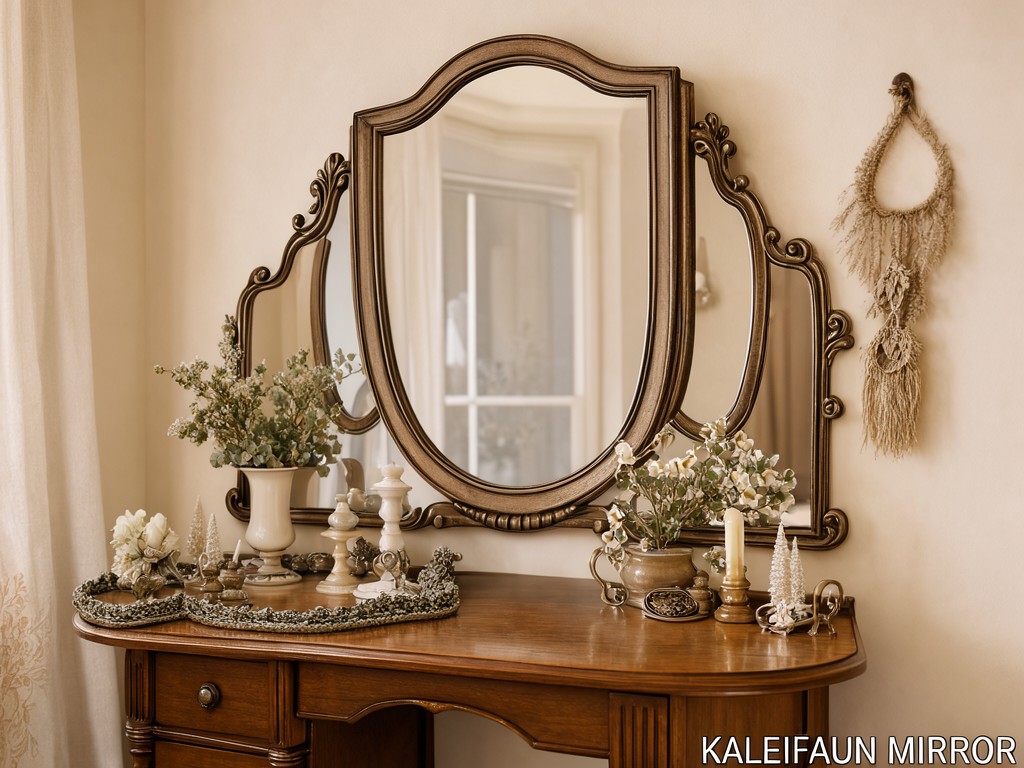
For bedroom dressing tables, boutique hotel rooms and home-furnishing retail, the usual supply is a framed mirror with wall-mounting hardware and protective export packaging. Frame shapes range from rectangular profiles with carved-look ornament to oval or arched silhouettes. The quote should state whether the mirror glass, frame, backing, hanging hardware and retail carton are all included.
A factory may create the vintage appearance through a distressed paint or foil finish on the frame, an antiqued effect on the mirror surface, or a combination. These are not interchangeable specifications. A finish reference should identify the base colour, degree of distress, sheen and any intentional variation; a glass reference should show the effect area and the required clear viewing zone.
For a launch shipment, settle the following as one approved supply definition:
- Overall frame dimensions, visible mirror area, profile depth and wall-mounting position.
- Frame material and finish reference, including whether distressed marks are intentional.
- Hardware, backing, barcode or retail label location, and carton protection for corners and glass edges.
What Actually Determines Performance
In everyday use, buyers judge the mirror by a clear, undistorted reflection, a frame that stays aligned, and hardware suited to the installed unit’s weight. Complaints often trace back to a narrow backing or weak frame joint, poorly protected glass edges, or finish differences between the approved sample and the bulk run. Large formats need particular attention to support and carton design because the glass area and frame dimensions increase handling exposure.
Bathroom placement adds humidity to the decision. A decorative frame intended for a dry bedroom should not be specified as suitable for a damp room without agreement on the frame substrate, finish system, backing and mirror-edge protection. No decorative wall mirror should be treated as an exterior product unless the supplier has confirmed that use in writing.
| Build choice | Buyer gains | Trade-off to specify |
|---|---|---|
| Engineered-wood frame with painted or foil finish | A lower-cost route to consistent colour and repeatable profiles. | Confirm edge coverage and finish limits; prolonged damp exposure can affect susceptible substrates. |
| Solid-wood frame with painted, stained or distressed finish | Visible grain and a more material-led finish for higher-priced ranges. | Natural grain and colour vary; approve acceptable variation and account for added weight. |
| Metal frame with applied vintage finish | A slimmer profile and a different surface character from wood-based frames. | Specify coating appearance and protection at joints or cut edges where corrosion could start. |
Materials and Construction Trade-offs
The frame profile drives more than appearance: deeper ornament adds material, finishing steps and carton volume. A simpler moulded or engineered-wood profile can hold a lower unit price, while carved-look detail or metalwork may suit a premium assortment at a higher cost. Buyers should compare finished samples under the same lighting, since gloss and distress marks can read differently across colours.
Mirror glass thickness and backing support should match the overall dimensions and mounting arrangement. A thin glass option can reduce weight and freight cost, but the frame and backing must support it without excessive flex. Heavier glass can change the hanging hardware requirement, packed weight and breakage exposure. Record the chosen glass thickness and backing method on the approved drawing.
Distressed paint usually offers a controlled route to a vintage frame appearance. Antiqued mirror glass creates a different effect and may reduce the clear reflection area by design. Buyers who need both should approve the frame sample and glass sample separately, then review them together as a finished unit. For humid interiors, the selected frame coating and mirror-edge treatment should be discussed for that specific placement rather than assumed from the antique styling.
Specification Range and Customisation Limits
Custom sizing is practical when the buyer provides a dimensioned drawing with overall width and height, profile depth, mirror opening, corner shape and hardware position. Do not rely on a reference photo to establish those dimensions. State the permitted dimensional variation on the drawing, since frame build, glass fit and mounting position each need a defined tolerance.
Common project variables include frame material, glass thickness, clear or antiqued glass, finish colour, sheen, distress pattern, backing and hanging hardware. The supplier should confirm which choices fit the selected frame tooling and order quantity before the buyer locks the launch calendar. A new profile or non-standard ornament can add sample and tooling time; a finish change on an existing profile is usually a narrower approval task.
Lock the Approval Sequence Before Booking Freight
Issue the drawing and finish references first, review a physical sample against them, then approve the final combination of glass, frame, hardware, label and carton. Keep one signed or otherwise controlled reference sample for both sides. Any change after approval—especially to dimensions, frame colour or pack-out—needs a written impact check against production timing and shipping volume.
Matching the Product to the Buyer's Need
Choose the construction around the room, retail position and handling route. A bedroom vanity mirror in a dry residential setting can use a wider range of frame materials than a product marketed for a humid dressing area. For import programmes, the carton must protect projecting ornament and glass edges while remaining practical for warehouse handling and retail presentation.
| Use level | Suitable specification direction | Buyer point to settle |
|---|---|---|
| Value retail bedroom range | Existing frame profile, standard finish route and a clearly defined mirror opening. | Balance unit cost against corner protection and a pack size suited to the retailer's receiving process. |
| Boutique hotel or guest-room fit-out | Consistent dimensions and finish across room sets, with mounting details aligned to the installation plan. | Confirm wall fixing requirements and whether the room environment includes regular humidity exposure. |
| Premium vintage-inspired collection | Distinctive frame detail, a controlled distressed finish or a specified antiqued-glass effect. | Approve appearance variation and allow time for sample review before the production booking. |
Moving from sample orders to container loads changes the cost of unresolved details. A small difference in carton dimensions can affect pallet arrangement, while an unapproved finish interpretation can create visible variation across a retail set. Confirm the final pack dimensions and carton markings with the supplier before shipment booking.
Buying Mistakes That Lead to Returns
Returns often start with a mismatch between the listing, approved sample and delivered unit. “Antique finish” without a defined reference leaves room for different interpretations, and an attractive sample does not establish how the product will be packed for export. Settle the physical specification and presentation details before the production order enters the schedule.
- Using overall dimensions as the mirror viewing size; specify both the outer frame size and clear mirror opening.
- Approving a finish from a photograph alone; use a physical reference for colour, sheen and distress pattern.
- Treating a bedroom frame as suitable for a humid bathroom without written agreement on materials and finish.
- Leaving wall-mounting hardware, label placement or glass-edge protection out of the approved drawing and pack specification.
- Changing size or finish after sample approval without checking the effect on production timing and freight configuration.
Request a Specification Review
Send the target dimensions, frame and glass preferences, finish references, launch date and expected order quantity. A specification review can identify open drawing details, sample approvals and packaging decisions before they affect the shipment schedule. Contact us to review your mirror specification.