Durable big vintage arched wall mirror B2B Supplier: What Buyers Should Check Before Ordering
Most quality disputes start with a consistency gap.
A mirror that arrives with a slightly different arch, frame tone, or hanging position can trigger room-set complaints and costly returns. Agree the controlled reference before production: dimensioned drawing, approved physical sample, finish reference, and written tolerances. A product description alone does not settle those details.
What Actually Determines Performance
A wall mirror depends on three interfaces: reflective glass, its backing and frame, and the wall fixing. Silvered glass gives the reflection; a protective backing helps shield the reflective layer. The frame holds the perimeter and supports the selected mounting points. If the frame twists, the mirror may sit unevenly or place stress at an edge. If moisture reaches an unprotected edge or backing, dark spots and coating deterioration can follow.
Vintage appearance adds another variable. An aged finish may be applied to the frame, the glass, or both; those are different specifications and should not be treated as interchangeable. Approve a sample under neutral light, note which areas are intentionally distressed, and set acceptable variation before the first order. For a large wall-hung unit, glass thickness, frame construction, finished weight, and hanger position must be agreed together rather than specified as separate catalogue details.
Arch Profile
Lock overall width, height, crown radius, and the transition into the straight sides on the approved drawing.
Glass and Edge
Specify glass thickness, edge treatment, backing, and whether the glass itself carries an aged effect.
Mounting and Weight
Confirm finished weight and hanger locations, then match the hardware to the intended wall type and installation method.
Use the inspection points below as a purchase specification, not as a substitute for an agreed drawing or sample. Set acceptance limits against the intended design and product size.
| Inspection Point | Practical Check | Agree Before Production |
|---|---|---|
| Overall dimensions and arch | Measure width, height, and profile against the approved drawing. | Measurement points and allowable dimensional deviation. |
| Reflection and glass edge | Review the reflection and visible edge for defects under agreed viewing conditions. | Viewing distance, lighting, and acceptable cosmetic limits. |
| Frame finish and alignment | Compare colour, distressing pattern, joint finish, and frame alignment with the signed sample. | Approved finish reference and allowable variation across units. |
| Hangers and rear assembly | Check that fixing points match the drawing and that rear components are secure. | Hanger type, position, and intended installation conditions. |
Option Comparison by Usage Level
The right specification depends on handling frequency, display location, and the cost of a replacement shipment. A lighter frame may suit a lower-price range, while a heavier construction can provide a more substantial appearance but adds freight weight and installation demands.
Retail Entry Range
A simpler frame profile and standard finish can keep the landed cost lower. This route suits planned retail display with controlled handling. Keep the sample, finish code, and hanger layout fixed; otherwise, repeat orders can drift even when the product name stays the same.
Frequent-Handling or Statement Range
A reinforced frame assembly, protected rear surface, and documented mounting points may suit showrooms, hospitality projects, and frequent stock movement. The trade-off is extra material, package volume, and installed weight. Confirm wall compatibility and carton protection before selecting this route for a broad assortment.
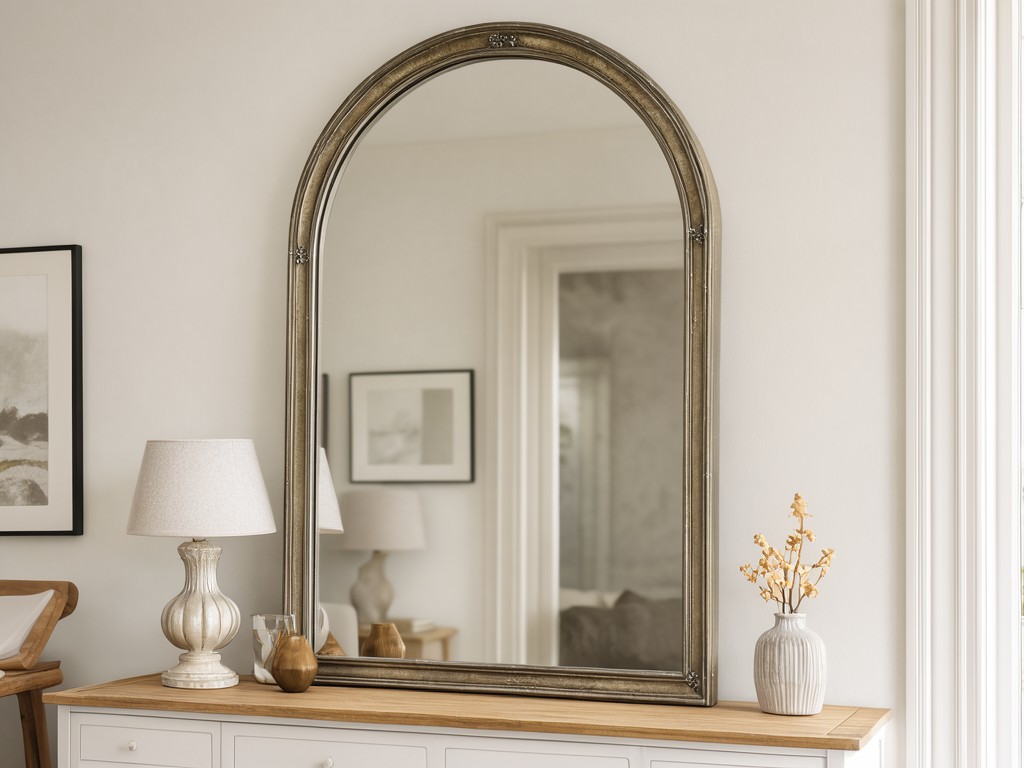
Neither option removes the need for careful packing or correct installation. If the mirror is intended for damp rooms or repeated public use, specify those conditions directly; a vintage look does not establish suitability for every environment.
Customisation Options and Their Limits
Custom sizing, frame profile, colour, distressing, glass treatment, and rear hardware can be specified for OEM programs. Each change affects a different control point. A revised arch needs a dimensioned profile; a new frame colour needs a physical or approved colour reference; a branded carton needs final artwork with placement and print details.
Do not approve a large-format mirror from a finish photograph alone. Camera exposure can hide small tone shifts, and sample-to-sample distressing may vary if the pattern is not defined. Sign off the glass, frame, rear assembly, and packaging separately, then retain one complete approved sample as the reorder reference. Changes after approval can require new samples, revised costing, and a fresh lead-time estimate.
- Send a dimensioned drawing with overall size, arch geometry, frame depth, and hanger positions.
- Mark whether the vintage effect belongs on the frame, the mirror surface, or both.
- Approve artwork at actual print size, including barcode, handling marks, and carton orientation where required.
- Record the sample revision and approved tolerances on the purchase specification.
Requirements by Buyer Segment
Wholesale buyers usually need a stable assortment, clear carton dimensions, and repeatable frame colours across replenishment orders. Their main exposure is a mixed lot: the same SKU may show visible differences in arch shape, distressing, or hanger placement. Set an inspection reference and identify each approved variant by code.
OEM buyers often need greater control over profile, packaging, and private-label artwork. Confirm whether requested custom sizes use existing tooling or require a new setup, and ask how sample approval affects the production window. Hospitality and project buyers should also provide the installation surface and expected mounting method so the fixing arrangement matches site conditions.
For all buyer types, compare the approved pre-production sample with the first shipment and retain the signed specification for reorders. A change in glass, frame supplier, finish, or packing method should trigger review before the next purchase order.
Keeping Repeat Orders Supplied
Reorder stability starts with a controlled product file: drawing revision, sample approval date, finish reference, packing configuration, and SKU-level labelling. Share a forecast when sizes or custom finishes require dedicated materials. If a size is held as a regular item, confirm the replenishment quantity and current availability before committing to a ship date; custom profiles and branded cartons may need a separate production window.
The figures below are planning ranges, not a substitute for a confirmed drawing and packing test. Finished weight depends on glass thickness, frame material, and hardware; the packed gross weight and carton dimensions should be approved against the export configuration before booking freight.
| Planning Size | Indicative Finished Weight | Common Material Choices | Packaging Consideration |
|---|---|---|---|
| 600 × 900 mm | Approx. 8–14 kg | Mirror glass with wood, MDF, or metal frame options. | Corner protection and a snug carton fit; verify unit orientation. |
| 800 × 1200 mm | Approx. 14–24 kg | Mirror glass with a specified protective backing and selected frame construction. | Use edge separation and internal restraint to limit movement in transit. |
| 900 × 1800 mm | Approx. 18–32 kg | Mirror glass and reinforced frame options; final weight depends on profile and thickness. | Confirm carton strength, handling marks, and pallet or floor-load plan for the route. |
Setup, Use and Replacement Parts
Install the mirror with fixings rated for its finished weight and suited to the wall substrate; included hardware may not suit every wall. Keep the unit supported during installation, and avoid pressure on the glass edge or frame corners. For commercial locations, provide the installer with the weight, hanger positions, and mounting instructions for the exact SKU.
Use a soft cloth and a cleaner suitable for mirror glass. Keep liquid away from exposed edges and the rear coating, since trapped moisture can damage the reflective layer. Do not use abrasive pads on the glass or vintage finish. If damage appears at an edge, remove the unit from service and assess it before further handling.
For service claims, record the SKU, batch or carton reference, damage location, and installation condition. Replacement hangers or frame components may be possible when the design uses serviceable parts; glass replacement depends on the construction and should be confirmed against the original specification. Share project drawings, target quantities, destination, and artwork status to discuss the right configuration and supply plan.
Discuss Your Mirror Project
Send the size drawing, finish reference, order quantity, packaging requirements, and approval timeline for a project-specific review.
Contact us to discuss specifications and repeat-order planning