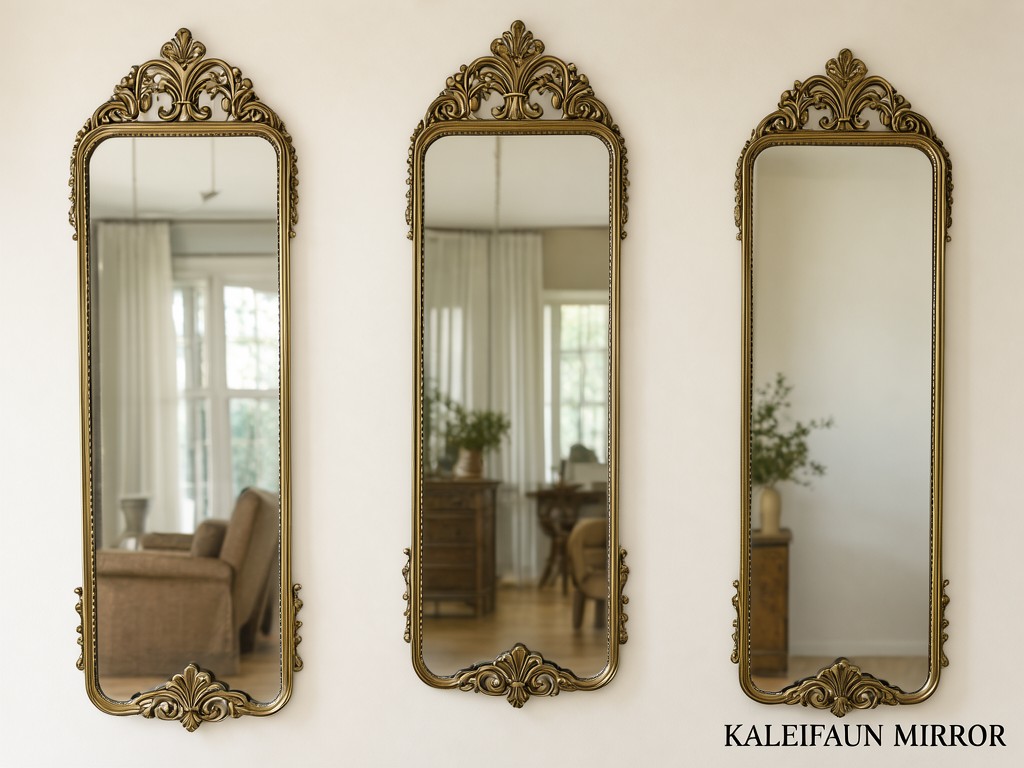
Specifying Wholesale antique brass full length wall mirrors Factory for Wholesale and OEM Orders
The main cost choice is a brass-tone finish on a steel or aluminium frame versus solid brass construction. A coated frame usually suits repeat private-label orders where finish matching and landed cost matter; solid brass costs more and may show greater natural shade variation between production batches.
When a brand extends an existing range, the mirror has to match the established frame tone, dimensions and packaging standard—not just the approved sample. Second-source qualification should compare those details alongside glass condition and freight damage, since returns and replacement shipments can outweigh a small unit-price difference.
What the Design Has to Balance
A full-length wall mirror needs a clear, undistorted reflection, a frame that holds its geometry, and mounting points suited to the intended wall. Increasing glass size raises weight and freight exposure; frame depth and corner construction must then support the glass without putting pressure on its edges.
Antique brass is a finish description, not a fixed colour standard. Surface texture, base metal, coating build and clear topcoat all affect the perceived tone. Approve a physical finish sample under consistent lighting, then define the accepted shade and sheen range for production; a digital image alone cannot control batch-to-batch appearance.
Material Options and Their Trade-offs
Frame substrate affects piece weight, finish route and cost. The right choice depends on the target price, mirror dimensions and the humidity expected in the room.
Steel Frame with Brass-Tone Finish
Steel can provide a firm frame at a controlled unit cost. The finish may use a plated or coated route, with surface preparation and topcoat selection set against the intended indoor conditions. Exposed edges and joints need particular attention, since coating damage there can become a corrosion starting point.
Aluminium or Solid Brass
Aluminium reduces frame mass and does not rust like untreated steel, though its surface still needs a compatible finish system. Solid brass offers a genuine metal surface but adds material cost and weight; natural alloy and finishing variation can make an exact shade match harder across separate lots.
Mirror glass thickness, edge finish and any safety backing should be selected together. A thicker glass panel adds weight, so confirm wall fixings and export packaging against the final assembly rather than the frame alone.
Who Uses It and Where It Matters
Furniture and homeware distributors commonly place these mirrors in bedroom and dressing-room ranges, where the antique brass finish must coordinate with other metal accents. Retail buyers also need cartons that protect glass corners through repeated handling in a distribution network.
Hospitality procurement teams may specify full-length mirrors for guest rooms, corridors or dressing areas. In humid locations, coating condition and sealed frame joints deserve more attention; the product is intended for indoor use, not direct exposure to rain or standing moisture. Private-label brands need the same approved finish, mounting arrangement and label placement across replenishment orders.
Requirements by Buyer Segment
For a wholesale buyer, landed cost includes breakage, replacement freight and the time needed to resolve claims. Compare pack-out performance and accepted cosmetic limits with the quoted unit price. A lower-priced frame finish can become the more expensive option if shade drift causes mixed displays or if coating damage generates returns.
Procurement teams qualifying a second source should align the golden sample, bill of materials, finish reference and inspection points before the first purchase order. Distributors often need mixed sizes or repeat shipments; confirm whether each size uses common frame components and whether cartons can carry the required SKU and handling labels without obscuring retail branding.
Inspection Items and Test Methods
Inspection should begin with the approved sample and a written limit for finish tone, sheen, frame alignment and visible marks. Check overall height, width, diagonals and mounting-point position against the drawing. A straightedge or reference fixture can reveal frame bow or twist that is difficult to judge by eye.
Review glass edges for chips and inspect reflection distortion against a straight-line reference. Check joints for open gaps, sharp edges and pressure points against the glass. Finish checks can include visual comparison under defined lighting, coating adhesion assessment and comparative humidity or salt-spray exposure when the sales environment warrants it; agree the method and acceptance criteria before production rather than assuming a universal pass limit.
For export orders, carton checks matter as much as factory appearance. Validate corner protection, internal restraint and the packed mirror’s response to the buyer’s agreed handling simulation. Record defects by lot so a repeat issue can be traced to glass processing, frame fabrication, finishing or packing.
Capacity, Tooling and Scheduling
Capacity depends on whether the order uses an existing frame profile and finish route or requires new tooling. A common profile can shorten setup, while a custom extrusion, forming die or corner detail adds development time and sample approval steps. Confirm the production route before fixing a launch date.
Scheduling should separate first-article approval, material procurement, frame finishing, mirror assembly and packing. Long mirror cartons can also affect container or pallet planning, so dimensions and pack quantity should be confirmed early. Production capacity is meaningful only when it includes the finish and inspection sequence required by the approved specification.
Stock Availability and Reorder Planning
Stock status can apply to mirror sizes, frame profiles, glass, or packaging materials separately. Ask which components are held for replenishment and which are purchased against each order; a stocked frame does not guarantee that the approved antique brass finish is available on the same schedule.
| Customization Point | Options to Confirm | Reorder Consideration |
|---|---|---|
| Overall size and frame profile | Existing dimensions or a custom drawing; profile depth and corner construction | Retain the approved drawing revision and check component availability by size. |
| Frame substrate and finish | Steel, aluminium or brass; agreed antique tone, texture and sheen | Use a retained physical reference and confirm finish-batch timing for repeat orders. |
| Glass and backing | Glass thickness, polished edge and specified safety backing where required | Keep the selected glass and backing configuration unchanged across matched lots. |
| Mounting and retail pack | Hanging hardware, carton protection, artwork and SKU labels | Approve packed dimensions and label files before replenishment booking. |
For a stable reorder, record the finish sample, glass specification, hardware and packaging revision with the purchase order. If the second source uses a different coating line or substrate, request a new production sample before combining its stock with the existing range.
Ordering, Tooling and Lead-Time Questions
Can an existing sample define the antique brass finish?
It can serve as a visual reference, but first confirm the substrate and finish process. Provide the physical sample or an agreed finish chip, then approve a production-representative sample under consistent lighting before bulk manufacture.
When does a mirror order need new tooling?
A new frame profile, formed detail or non-standard corner may need dedicated tooling. Changes limited to size, finish or packaging may use existing production resources, subject to profile availability and the factory’s process review. Confirm tooling ownership and any sample charges in the quotation.
What information is needed to quote MOQ and lead time?
Share target dimensions, quantity by size, frame material, finish reference, glass details, mounting method, carton requirements and destination. MOQ and schedule depend on material purchase quantities, finish-batch setup, tooling and sample approval; confirm the timing after the specification is reviewed.
To qualify a second source, send the current drawing, approved finish reference and export-pack requirements for a tooling and process review. Request a tooling review and production quotation before committing the launch schedule.