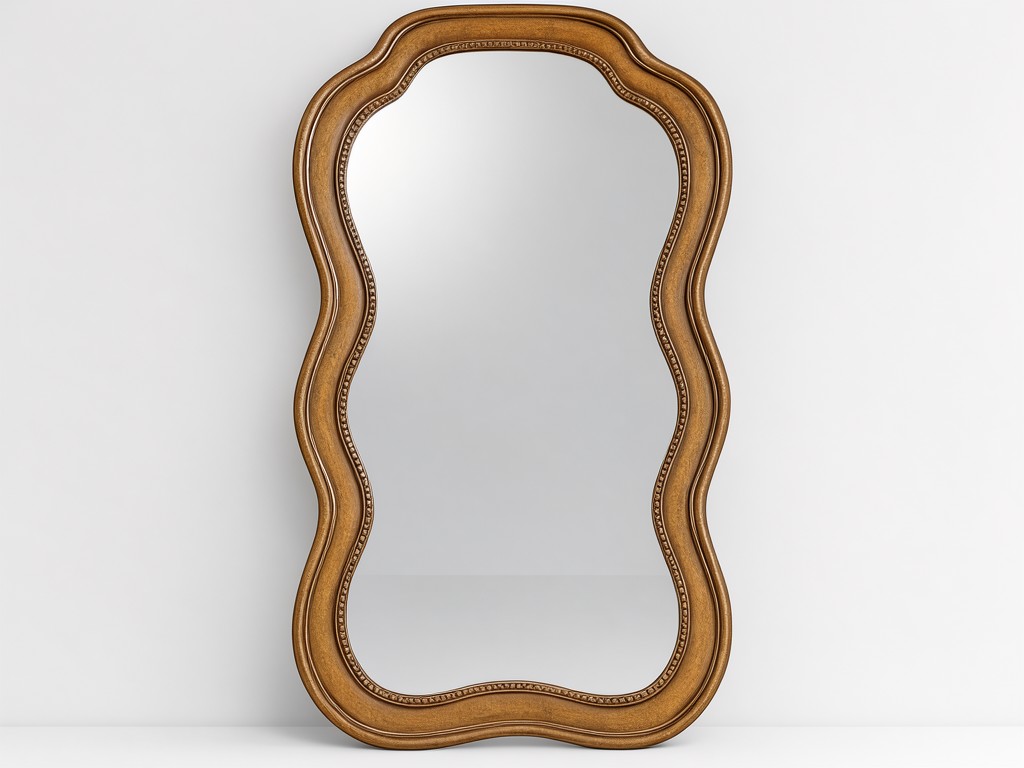
Wholesale wavy frame full body mirror Suppliers: What Buyers Should Check Before Ordering
When a brand extends an existing range with a wavy frame full body mirror, the launch date often depends on details agreed before production: finished dimensions, frame profile, glass specification, artwork and carton approval. A sample can confirm the look, but production drawings and written tolerances are what keep the reorder aligned.
For distributors and retail buyers, approve the packed dimensions and delivery configuration alongside the mirror itself. Late changes to either can affect carton design, loading plans and the arrival date.
Specification Range and Customisation Limits
For bedroom and dressing-area retail, buyers commonly specify a mirror around 150–170 cm high and 40–60 cm wide. Larger glass and deeper wave profiles add weight and increase the risk of frame damage in transit, so confirm the final dimensions against the intended display and carton before approving a sample.
Common Size Band
About 150–170 cm high, with width and overall profile confirmed on the approved drawing.
Glass and Backing
Mirror glass is commonly 3–5 mm thick. A safety backing film can help retain fragments if glass breaks; it does not make the mirror unbreakable.
Frame Construction
MDF or solid wood suits many routed profiles; molded polymer may suit deeper, repeatable contours where tooling cost is justified.
Indicative Unit Weight
A typical full-length unit may fall around 8–18 kg, depending on glass size, frame material and hardware.
| Order Profile | Indicative Finished Size | Approx. Unit Weight | Typical Construction |
|---|---|---|---|
| Compact retail range | About 150 × 40 cm | About 8–12 kg | 3–4 mm glass with a routed MDF or wood frame |
| Standard full-length range | About 160 × 50 cm | About 10–15 kg | 4 mm glass; frame and backing specified to suit the profile |
| Wide statement range | About 170 × 60 cm | About 13–18 kg | 4–5 mm glass with reinforced frame support as needed |
These figures are planning ranges, not production tolerances. Glass size, frame depth, mounting hardware and packing material change the finished weight. Put the confirmed outside dimensions, weight target and acceptable dimensional variation on the approved specification sheet.
Customisation Options and Their Limits
Changes to the wave contour are easiest to control when the buyer supplies a dimensioned drawing or signs off on a physical profile sample. A small contour adjustment can alter frame width at the narrow points, which affects both visual symmetry and the protection needed around the glass edge.
| Custom Item | Options to Confirm | Approval Point |
|---|---|---|
| Overall size and contour | Height, width, corner treatment and wave depth | Signed drawing or approved profile sample |
| Frame and surface finish | MDF, wood or molded polymer; painted, stained or wrapped finish | Finish sample under agreed lighting |
| Mounting configuration | Portrait or landscape hardware; wall-hung or floor-standing arrangement | Hardware drawing and intended installation notes |
| Retail identity | Label, barcode, care information and carton artwork | Final artwork proof before printing |
Approval rule: Do not release bulk production from a sample alone. Match the sample to the signed drawing, finish reference, hardware layout and packaging proof; record any approved deviation before the order is scheduled.
A new molded frame profile can require tooling and additional sampling time. Routed MDF or wood contours may be more practical for a first launch or a lower-volume colour test, while molded parts can support repeat orders once the tooling and finish are approved.
Quality Control and Batch Consistency
On a club programme that reorders twice a season, buyers need each batch to match the approved contour, frame colour and mounting arrangement. Variation in wave depth or frame width is visible across a retail display, while a small change in glass dimensions can leave uneven reveals at the frame edge.
A practical inspection plan checks finished height and width, frame alignment, diagonal measurements, surface finish and the mirror face for scratches, edge chips or visible distortion. Inspect the backing and adhesive contact as well; separation can cause movement or rattling after handling. Hardware fit should be checked against the approved layout, and any pull or retention check should use the buyer’s agreed installation conditions.
- Keep a signed reference sample and drawing revision with the purchase order.
- Record inspection findings by production lot so a repeat order can be compared with the launch batch.
- Check finished and packed dimensions before the shipping booking; carton changes made late can hold dispatch.
Agree the sampling level, defect categories and photo-report format before the production run. That gives the buyer and factory the same basis for accepting cosmetic variation versus rejecting damage that affects use or saleability.
Packing, Marking and Freight Configuration
Moving from sample orders to container loads changes the risk profile: cartons may be handled more often, and pallet height or container loading limits can constrain the packing plan. Confirm the packed dimensions, carton quantity, pallet arrangement and shipping marks before artwork approval.
Specify corner and edge protection, separation between the glass and frame, and restraint that prevents movement inside the carton. A trial packed unit can reveal pressure points around the wavy profile. Ask for packing photos and confirm carton markings, barcode placement and destination labels against the retailer’s routing instructions.
For Sample Shipments
Use a separately identified sample carton and confirm its packed measurements. The approved sample should represent the production finish, hardware and protective materials.
For Retail or Container Loads
Approve carton artwork, marks, packing quantity and loading plan before dispatch booking. State any retailer-specific pallet or label requirements in the order documents.
Questions Buyers Ask Before Ordering
What should be included in the production approval set?
Include a dimensioned drawing, the approved frame and finish sample, glass and backing details, hardware positions, artwork proof and final packing configuration. A written record of tolerances and sample changes prevents different interpretations at bulk production.
Can the frame colour or wave profile be changed for a repeat order?
Usually, but confirm whether the new finish uses an existing material and process or requires a new profile or tooling. Approve a fresh sample or finish reference before production; colour names alone do not define a repeatable finish.
How can buyers protect a launch date?
Set dates for drawing sign-off, sample approval, artwork approval and packing confirmation before placing the order. The production and dispatch schedule can only be confirmed against those approval points, material availability and the agreed freight plan.
What affects the minimum order quantity?
MOQ depends on the frame material, finish, tooling needs and packaging print run. Ask for separate quantities and lead-time estimates for an existing profile and a newly developed profile, so the cost and schedule trade-off is clear.
Request a Pre-Production Sample
Send the target dimensions, wave-profile reference, finish direction, expected order quantity and required arrival window. Request a sample and approval schedule that includes drawing review, artwork sign-off and packed-carton confirmation before bulk production.
Discuss a sample request and launch schedule