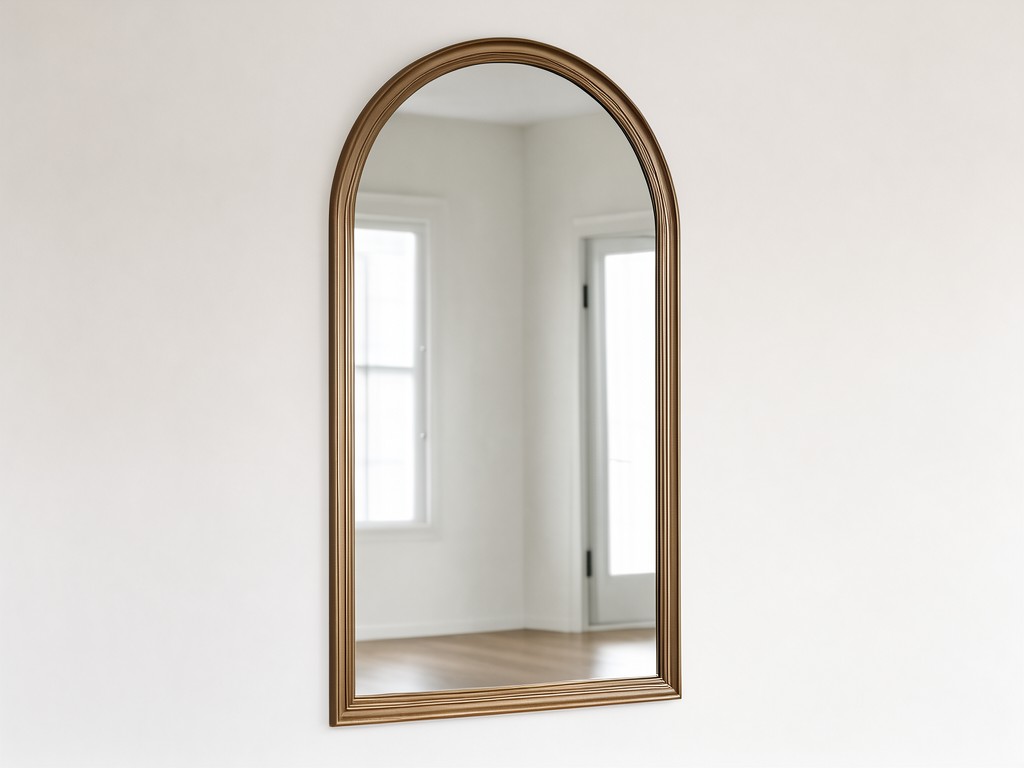
The main cost decision is glass thickness and frame construction versus the handling risk of a large, heavy panel. Confirm finished dimensions, installation method and freight protection before approving a production sample; changing the arch or frame after approval can add tooling and delay a launch.
custom large arched window wall mirror top supplier: What Buyers Should Check Before Ordering
A large mirror can arrive intact and still create a costly return if the arch, overall height or hanging hardware does not match the buyer’s space. Stock sizes reduce unit cost, but a mismatch can leave an importer with slow-moving inventory or force a retail launch to slip.
For a custom order, tooling amortisation depends on how many units share the same arch profile and frame details. Keep the glass outline, frame finish and mounting position fixed across the run where possible; reserve custom changes for dimensions that solve a confirmed fit requirement.
Design Constraints Behind the Specification
The arched top is the controlling dimension: a small change to the crown radius alters the visual proportion and can affect how the mirror sits against a wall or furniture. Specify the overall height and width, the arch rise or radius, frame face width, and whether the window-style dividers are attached to the glass or built into the frame.
Attached decorative bars cost less and are easier to revise than a design built from separate glass sections, but they can collect dust at joints and may shift if adhesive or assembly tolerances are poor. A full-size drawing and one approved sample establish the profile and divider positions before the batch is cut.
Specification rule: define the measurement points on the drawing, including whether the stated size is glass size or finished frame size. Use finished outside dimensions for retail listing and carton planning.
How It Performs in Use
In a home or commercial interior, the mirror is judged by a clear reflection, a stable frame and hardware that holds the unit at its installed weight. Larger panels flex more during carrying and wall mounting, so glass thickness, frame support and the position of hanging points need to be considered together rather than selected independently.
Humidity resistance is a finish and edge-protection question, not a claim that a standard decorative mirror is suitable outdoors or in a wet zone. Repeated moisture at exposed edges can damage the reflective backing; specify the intended room conditions and keep the mirror away from direct water unless the construction has been designed for that exposure.
For launch planning, approve the packed sample as well as the mirror itself. A design that saves a small amount on frame material can cost more after breakage, carton changes or damage-related returns are counted.
Material Options and Their Trade-offs
Glass and Reflective Backing
Float glass with a reflective coating is a common cost-controlled build. Copper-free mirror glass is an available option where improved resistance to backing corrosion is required, but its price and availability depend on thickness and processing. A protective backing film can help retain fragments after breakage; it does not make ordinary mirror glass unbreakable or establish that the product meets a particular safety requirement.
Frame and Surface Finish
Metal frames suit slim profiles and can take painted or plated finishes; wood or engineered-wood frames allow broader profile choices but need a finish suited to the expected indoor humidity. A wider or heavier frame adds material and freight weight, while a narrow frame leaves less coverage at the mirror edge. Confirm colour using a physical sample because screen references do not show finish sheen or texture consistently.
Choose the backing and frame as a matched specification. If regular cleaning or humid room conditions are expected, ask the supplier to confirm how the edges and rear surface are protected, then use those limits in care instructions and product copy.
How It Is Built and What That Changes
Production typically starts with glass cut to the approved arch template, followed by edge grinding and polishing, application of the reflective coating and backing, and assembly into the frame. The frame, decorative dividers and hanging hardware are then fitted to the agreed drawing. The process order matters: any cutting, drilling or edge work must be completed before a glass panel is tempered.
A new arch template or dedicated assembly fixture adds setup cost but can reduce profile variation across repeat batches. Combining repeat orders under one approved drawing spreads that setup cost over more units; frequent changes to the crown, frame section or divider layout can reset the schedule and require another sample approval.
Tempered mirror glass may be possible for some designs, but it requires the supplier to confirm compatibility with the coating and finished shape before the order is placed. Treat it as a construction change with implications for cost, lead time and sample approval, not as a late-stage substitution.
Measured Performance in Real Use
Glass thickness is a direct driver of panel weight, while frame material and hardware add further load. The figures below are planning estimates for finished units with a frame; final weight depends on frame section, backing, hardware and exact dimensions. Confirm actual sample weight before setting carton specifications or wall-hardware guidance.
| Typical finished size | Indicative unit weight | Buyer check |
|---|---|---|
| 600 × 900 mm | About 7–10 kg | Confirm hanger position and orientation before retail packaging is finalised. |
| 900 × 1,800 mm | About 20–27 kg | Check lifting, carton handling and the specified wall-fixing method. |
| 1,200 × 2,000 mm | About 29–38 kg | Assess crate handling and freight limits with the packed dimensions, not mirror size alone. |
These estimates assume a typical framed mirror and are not load ratings for the wall or supplied hardware. A thicker panel can reduce handling flex, but it increases shipping weight and the demands on the frame and fixing points; select thickness against size and installation conditions.
Buying Mistakes That Lead to Returns
A drawing that shows only width and height leaves too much open to interpretation. Buyers should also lock the arch profile, frame depth, edge treatment, finish reference, divider layout and hanging method; otherwise, a sample can look close while still missing the installation or retail requirement.
Another common error is approving the mirror but not the packaging. Large arched panels have vulnerable edges and corners, and a carton designed for a rectangular product may leave the crown poorly supported. Confirm the packed sample and handling orientation before the production date is fixed.
Do not treat “humidity resistant” as equivalent to outdoor suitability. Direct rain, standing water or prolonged damp contact can reach the backing through exposed edges or joints. Match the product description to the intended indoor conditions to reduce avoidable claims.
What Gets Checked Before Shipment
Pre-shipment checks should compare finished samples against the approved drawing and reference finish. Typical checks include overall dimensions, arch symmetry, edge condition, visible coating defects, frame joints, divider alignment and the position and attachment of hanging hardware.
A reflection review from normal viewing angles can identify visible distortion or coating marks; dimensional checks cannot substitute for that visual review. Packaging should also be inspected for corner support, separation between units, movement inside the carton or crate, and clear handling orientation. Agree the inspection sample plan and defect criteria before production so shipment approval does not become a last-minute dispute.
Care, Storage and Service Life
Clean the glass with a soft, non-abrasive cloth and a suitable glass cleaner. Apply liquid to the cloth rather than spraying directly at the frame or mirror edge; liquid that sits at the edge can reach the reflective backing. Avoid scouring pads and harsh chemicals that can scratch the surface or affect the finish.
Store cartons upright in a dry, covered area and follow the marked orientation. Do not stack or lean heavy goods against the mirror cartons, and avoid prolonged exposure to direct sun or damp conditions that can affect frame finishes and backing protection. Once installed, check that fixings remain secure after repositioning or building work.
| Packaging stage | Typical provision | Confirm before booking |
|---|---|---|
| Individual protection | Edge and corner protection with a separated contact surface. | Check that protection supports the arched crown as well as straight edges. |
| Export carton or crate | A carton for smaller units; a reinforced carton or crate may be needed for large formats. | Approve packed dimensions, gross weight, stacking limits and handling marks. |
| Pallet or container loading | Units restrained to limit movement in transit. | Review loading orientation and pallet dimensions against the shipment plan. |
For a specification review, send the finished dimensions, arch drawing, frame and finish reference, target quantity, destination and required ship date. Review your mirror specification before confirming the order so sample approval, packaging and production timing can be checked together.